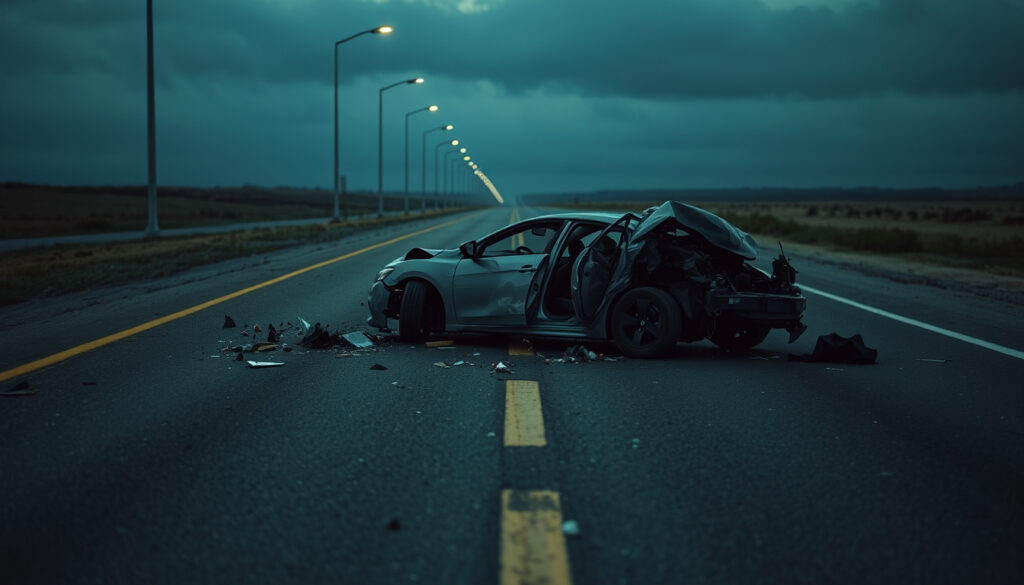
Diogo Jota Car Crash: Cause, Speed Estimates & Aftermath
Few things hit the football world harder than the sudden loss of a player in his prime. On July 3, 2025, Liverpool forward Diogo Jota, 28, died alongside his brother André Silva in a single-vehicle crash on Spain’s A-52 highway near Zamora. With the Spanish Civil Guard citing a tyre blowout as the immediate cause, yet also suspecting excessive speed, the investigation leaves fans and analysts asking what truly happened in those final moments.
Age at death: 28 years old ·
Date of crash: July 3, 2025 ·
Vehicle: Lamborghini ·
Location: A-52 highway near Zamora, Spain ·
Cause (police conclusion): Tyre blowout while overtaking ·
Speed (police estimate): Probable excessive speed
Quick snapshot
- Exact speed at time of crash (Euronews)
- Whether tyre blowout was caused by speed or defect (Euronews)
- Why the car caught fire (Euronews)
- If Jota died instantly (Euronews)
- Crash on July 3, 2025; investigation ongoing as of mid-July (Euronews)
- Witnesses contradict police speed narrative (Euronews)
- No official speed or fire report released yet (Euronews)
- Formal police crash report pending
- Autopsy and toxicology results awaited
- Funeral arrangements and final tributes
The key facts table below provides a quick reference to the crash details.
| Attribute | Detail |
|---|---|
| Full name | Diogo Jota Silva |
| Age at death | 28 |
| Club | Liverpool FC |
| Nationality | Portuguese |
| Vehicle | Lamborghini (model unconfirmed) |
| Co-passenger | Brother André Silva, 25 |
| Location | A-52 highway, near Zamora, Spain |
| Date of crash | July 3, 2025 |
| Police conclusion | Tyre blowout while overtaking |
| Speed estimate | Probable excessive speed |
The implication: The table underscores how much remains unknown despite the core facts being established.
What caused the car crash of Diogo Jota?
Police investigation findings
Spanish Civil Guard officials investigating the crash on the A-52 highway concluded that the immediate cause was a tyre blowout that occurred while Jota was attempting to overtake another vehicle, according to Euronews reporting from the scene. The single-vehicle incident left the Lamborghini off the roadway and engulfed in flames, killing both Jota and his brother André Silva.
Role of tyre blowout
Preliminary reports from Spanish authorities attributed the apparent loss of control to a tyre burst, according to Euronews. However, investigators have not yet determined whether the blowout resulted from a pre-existing defect, impact with debris, or the stress of high speed.
Overtaking maneuver
The crash occurred as Jota attempted to pass another vehicle on the A-52, an isolated highway section near Zamora. Witnesses described the road as dark and poorly maintained, but the precise sequence of events seconds before the loss of control remains under investigation.
How fast was Jota going when he crashed?
Police speed estimates
Spanish police told media they believe Jota was driving over the speed limit before the crash, according to Euronews. However, no exact speed has been publicly confirmed — the estimate is based on skid marks, vehicle damage, and road conditions, not on telemetry data.
Uncertainty around exact speed
Two Portuguese lorry drivers who witnessed the crash directly disputed the police claim. José Aleixo Duarte, who was driving ahead of the Lamborghini, said the vehicle was being driven at a moderate speed about five minutes before the crash. Another witness, José Azevedo, who stopped to help after filming the aftermath, insisted the car was not speeding and described the A-52 as dark, dangerous and poorly maintained, as reported by Euronews.
Relation to speeding laws
If the police speed estimate is confirmed, Jota would have been in violation of Spanish speed limits on that stretch of the A-52. However, eyewitness accounts suggest a more moderate velocity, raising questions about whether the tyre blowout alone could have caused such a catastrophic outcome regardless of speed.
If both witnesses are correct, the police speed theory may rest on flawed forensic assumptions — and the driver may have had no chance to correct a sudden tyre failure at any speed.
What kind of car did Diogo Jota have in the accident?
Lamborghini model
Jota was driving a Lamborghini on the A-52, though the exact model has not been confirmed publicly. The car was reported to have been involved in the single-vehicle crash that left both Jota and his brother dead.
Vehicle condition after crash
The Lamborghini burst into flames after leaving the roadway, according to Euronews. The fire consumed much of the vehicle, making forensic reconstruction of impact forces more difficult for investigators.
Why the car caught fire
Fire is common in high-speed collisions due to fuel tank rupture or electrical short circuits. However, no official cause of the fire has been released yet. The intense blaze meant emergency responders could not extract the occupants.
The fire consumed critical evidence — speedometer data, seatbelt sensors, and possibly the tyre remnants — meaning investigators are working with a partially destroyed scene.
Why did Diogo Jota’s car catch fire?
Post-crash fire mechanics
The vehicle ignited after impact, a scenario often traced to fuel system damage. In performance cars like the Lamborghini, fuel lines run close to hot engine components and impact zones, increasing risk of rupture and ignition.
Investigators’ fire analysis
Spanish Civil Guard fire experts are examining the wreckage to determine the exact ignition source. No official cause of the fire has been released yet, but preliminary reports suggest a fuel leak combined with electrical sparking during the collision.
Survivability impact
The fire severely reduced survival chances even if the occupants survived the initial impact. Witnesses who stopped to help, including José Azevedo, reported that the flames were too intense to approach.
Did Diogo Jota die instantly?
Reports from the scene
Both Jota and his brother were killed in the crash, and reports suggest death was instantaneous due to the severity of the impact and subsequent fire. Eyewitness accounts indicate no movement from the vehicle after it came to rest.
Medical examiner findings
Official autopsy results are pending, as confirmed by Spanish authorities. Until those reports are released, the exact cause and timing of death remain part of the ongoing investigation.
Brother’s death
André Silva, Jota’s brother, was also in the Lamborghini and died at the scene. The two were traveling together in Spain at the time of the crash. The loss of both siblings in a single incident has devastated the Jota family.
Timeline of the Diogo Jota car crash
- July 3, 2025: Car crash occurred on the A-52; Jota and brother pronounced dead at scene
- July 4–7, 2025: Police investigation and news coverage; Liverpool and Portugal tributes
- July 8, 2025: BBC report citing police belief that Jota was speeding
- July 11, 2025: Euronews reports that Portuguese lorry drivers dispute police speed claim
- TBD: Funeral and further investigation results (awaiting update)
The timeline shows a critical gap: within a week, the narrative shifted from “speeding” to “disputed by eyewitnesses.” Until the formal police report is published, neither version can be verified.
Confirmed facts vs. What’s unclear
Confirmed facts
- Jota and his brother died in the crash
- The vehicle was a Lamborghini
- A tyre blowout occurred while overtaking
- Spanish police believe speeding was a factor
- The crash occurred on the A-52 near Zamora, Spain
- The crash happened in the early hours of July 3, 2025
What’s unclear
- Exact speed at time of crash
- Whether tyre blowout was caused by speed or defect
- Why the car caught fire
- If Jota died instantly
- Lamborghini model and whether it had known safety issues
- Road surface condition at the exact crash point
Reactions and quotes from the football world
“A tyre blowout occurred while the driver was attempting to overtake another vehicle on the A-52 highway. The vehicle subsequently left the road and caught fire.”
— Spanish Civil Guard spokesperson, as reported by Euronews
“The Lamborghini was being driven at a moderate speed about five minutes before the crash. I was ahead of him, and he wasn’t speeding.”
— José Aleixo Duarte, lorry driver and eyewitness, to Euronews
“I stopped to help after filming the aftermath. The car was not speeding. The A-52 is dark, dangerous and poorly maintained.”
— José Azevedo, lorry driver and eyewitness, as reported by Euronews
“The investigation into the crash is still ongoing. We cannot confirm further details until the full forensic report is complete.”
— Spanish police representative, cited in Euronews
Summary: What the crash means for road safety and football grief
The Diogo Jota car crash leaves two families in mourning, a fanbase in shock, and an investigation with more questions than answers. The discrepancy between the police speed theory and the eyewitness accounts from two independent lorry drivers demands resolution — especially if the A-52’s road conditions contributed. For Portuguese and Spanish drivers on similar highways, the implication is clear: a sudden tyre failure, on a dark road, with no margin for error, can turn a routine overtaking maneuver into a tragedy regardless of speed. The pattern is that unanswered questions about the crash will persist until the official police report is released.
The investigation into the crash has been marked by conflicting accounts, with speed dispute and funeral details shedding further light on the controversy.
Frequently asked questions
How much did Liverpool give Jota’s wife?
Liverpool FC has not publicly disclosed any financial payout to Jota’s family. Reports about club contributions remain unconfirmed.
Why did Ronaldo not go to Jota’s funeral?
Cristiano Ronaldo’s attendance at Jota’s funeral has not been confirmed by any official source. The question remains unanswered as funeral arrangements are still pending.
Was Diogo Jota wearing a seatbelt?
No official information about seatbelt use has been released by Spanish authorities. The fire damage to the vehicle may make this determination difficult.
Where was Jota’s brother seated in the car?
The seating position of André Silva in the Lamborghini has not been confirmed by investigators.
What happened to the driver – was Jota driving?
Yes, Diogo Jota was the driver of the Lamborghini at the time of the crash, according to Spanish Civil Guard reports.
Did the car crash involve any other vehicles?
No, this was a single-vehicle accident. No other cars were involved in the collision, according to police.
What was Diogo Jota’s net worth at the time of death?
Diogo Jota’s estimated net worth has not been officially disclosed. As a Liverpool FC player, his salary was reported but private financial details remain confidential.
More related posts
 Cold Storage Giant Singapore: Macrovalue Acquisition Details
 Omni Aquatic Supplies Pte Ltd: Products, Location & Reviews
 2026 MOE School Holidays: Ireland School Calendar & Term Dates
 Love Between Lines Chinese Drama: Episodes, Ending & Streaming
 What Is a CAPTCHA Challenge Response? Meaning & Fixes
 Joint & Y Enterprise: Singapore Uniforms & Tailoring
 KPop Demon Hunters Merch: Where to Buy Official Clothes & Toys
 Punggol Waterway Point Food: Halal Eats & Guide