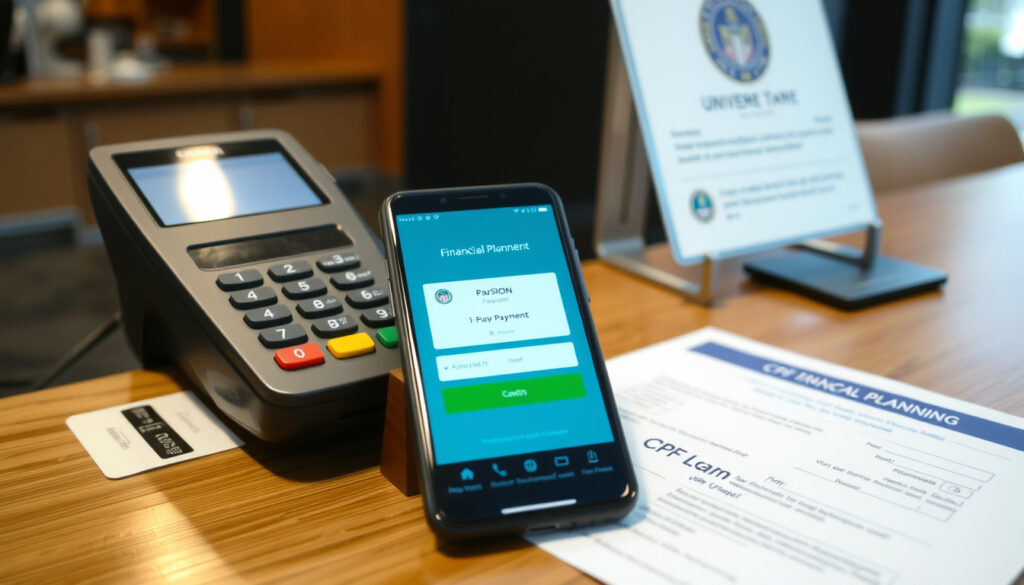
NUS Fee Payment Options: GIRO, PayNow & CPF Loans
Trying to figure out how to pay your NUS tuition fees can feel like decoding a puzzle, with GIRO, PayNow, CPF loans, and international payment platforms to consider. The good news? NUS has built a system that gives both local and international students fee-free options, and we’re here to map them all out.
Annual subsidized tuition fee for Singaporean undergraduates (AY2025/26): S$8,200 · Application fee for international applicants: S$20 (non-refundable) · GIRO payment deadline for Semester 1: 27 August · Payment methods with no processing fee: GIRO, PayNow QR, Flywire, Convera (via NUSFastPay) · CPF Education Loan coverage: Up to 100% of subsidized tuition fees
Quick snapshot
- GIRO is available for tuition fees (NUS Office of Finance (GIRO payment guide))
- PayNow QR is accepted for fee payment (NUS Office of Finance (payments page))
- NUSFastPay is the recommended platform for international payments (NUS Office of Finance (payments page))
- CPF Education Loan covers subsidised tuition fees (NUS Financial Aid & Loans page)
- Exact processing fee for credit card payments is not specified on the main NUS payment page.
- Whether hostel fees can be paid via the same methods as tuition fees is not explicitly stated.
- The step-by-step application process for CPF Education Loan is not detailed on the NUS payment portal.
- Whether NUSFastPay accepts payments from all international banks is not confirmed.
- GIRO deduction happens on the 27th of each month (NUS GIRO payment page)
- Non-GIRO payment due date for Semester 1 is 27 August (Reddit community (r/nus))
- Set up GIRO or choose a fee-free method before the deadline
- International students should start with NUSFastPay
- Singaporean students can explore CPF Education Loan for tuition
These five snapshot facts summarise the core payment picture for AY2025/26.
| Item | Value |
|---|---|
| Local undergraduate tuition fee (subsidised) | S$8,200 per year |
| Application fee | S$20 (non-refundable) |
| GIRO deduction date | 27th of month |
| PayNow QR fee | No processing fee |
| CPF loan coverage | Up to 100% of subsidised fees |
How to pay for NUS fees?
Overview of payment methods
NUS encourages students to use GIRO, PayNow QR, Flywire, or Convera via NUSFastPay because these methods do not incur processing fees, according to the NUS Office of Finance (official payment page). Credit card and telegraphic transfers are also accepted but may come with bank charges. The NUS payment page lists Interbank GIRO, e-payment methods (PayNow QR, Flywire, Convera, credit card, debit card, Alipay) as valid channels.
Step-by-step guide to using NUSFastPay
- Log in to the NUS student portal and navigate to the fees section.
- Select the option “Pay via NUSFastPay”.
- If using Convera, choose “Education Records System” in the dashboard first, otherwise the Convera tile will not appear (NUS Convera user guide (PDF)).
- Follow the prompts to enter your amount, currency, and payment method.
- Note down the ESG reference number provided by Convera for tracking.
Setting up GIRO for automatic deduction
GIRO is a one-time setup, free of charge, and automatically deducts fees on scheduled due dates. It works for Tuition Fee, Miscellaneous Student Fees, Hostel Fees, and other charges like Transcript Fees (NUS GIRO payment guide). The bank account can be the student’s or a parent’s.
Paying via PayNow QR
PayNow QR allows instant payment from a local Singapore bank app with no processing fee. It’s a one-time payment per invoice, ideal for students who don’t want recurring deductions (NUS payments page).
Choosing GIRO or PayNow QR saves you the processing fee that credit cards levy. For international students, NUSFastPay with Flywire or Convera locks in competitive rates with no hidden charges.
How to pay for NUS application fee?
Application fee amount and payment methods
The non-refundable application fee is S$20 for international applicants (NUS payments page). Local applicants may pay via eNets or credit card directly through the online application system. International applicants can use credit card or Flywire via the NUS applicant portal.
Paying through the NUS applicant portal
When submitting an application, the portal prompts payment at the final step. For local applicants, eNets deducts funds from a Singapore bank account instantly. For overseas applicants, the portal redirects to Flywire’s secure interface.
International payment options via Flywire
Flywire offers competitive exchange rates, real-time tracking, and the ability to pay in 140+ currencies. There are no processing fees for the student when using Flywire through NUSFastPay (NUS Office of Finance).
The S$20 application fee is the same for all international applicants, but the processing time varies by method. Credit card payments are instant; Flywire can take 2–3 business days to reflect.
What this means: applying from abroad is straightforward as long as you use the portal’s integrated payment step. No separate bank transfer needed.
Can I use CPF to pay for NUS?
CPF Education Loan Scheme (CELS) eligibility
Only Singapore citizens can use CPF savings to pay for tuition under the CPF Education Loan Scheme (NUS Financial Aid & Loans page). The loan covers up to 100% of subsidised tuition fees for full-time undergraduates in MOE-subsidised courses. Other fees (Miscellaneous Student Fees, Hostel Fees) must be paid separately via GIRO or other methods.
How to apply for CPF loan for tuition fees
Students apply through the CPF Board’s online portal or by submitting a paper form endorsed by NUS. The loan amount is disbursed directly to NUS each semester. NUS’s financial aid page provides the application link and instructions.
Limits and repayment terms
The loan must be repaid with interest after graduation. The interest rate is pegged at the CPF Ordinary Account rate (currently 2.5% per annum). Repayment starts one year after graduation or after leaving the course (NUS Financial Aid & Loans).
CPF Education Loan only covers the subsidised tuition portion. Students still need to cover miscellaneous fees (S$150–S$200 per semester) and hostel fees from their own funds or other payment methods.
The pattern: CPF is a powerful tool for Singaporean families to avoid upfront cash outlay, but it’s not a full coverage solution.
What are the different types of NUS fees?
Tuition fees for undergraduate and graduate programs
Tuition fees vary by nationality and program. For AY2025/26, Singaporean undergraduates in subsidised courses pay approximately S$8,200 per year. International undergraduates pay between S$17,550 and S$38,200, depending on the faculty. Graduate fees are structured differently, often per module or per semester (NUS Student Finance Matters).
Miscellaneous student fees (Student Services Fee, Health Service Fee)
Every semester, students pay a compulsory Student Services Fee (about S$100) and a Health Service Fee (about S$50). These cover campus facilities, counselling, and health services. They total roughly S$150–S$200 per semester (NUS Student Finance Matters).
Hostel fees and other charges
Hostel fees depend on room type and meal plan. A standard double room with meals costs around S$3,600–S$4,500 per academic year. Other charges include transcript fees (S$10–S$20 per copy) and late payment penalties (5% of outstanding amount).
The trade-off: the low tuition for Singaporeans is offset by the need to cover miscellaneous and hostel fees separately, often requiring a second payment setup.
How much are NUS fees for Singaporeans?
Annual tuition fee for Singaporean undergraduates (subsidized)
Subsidised tuition for Singaporean undergraduates is approximately S$8,200 per year. This is after the MOE tuition grant subsidy, which covers about 75% of the full fee. Students who do not take the grant pay the full unsubsidised rate (NUS Student Finance Matters).
Fee comparison with international students
International students pay significantly more: S$17,550–S$38,200 per year. They are not eligible for the MOE tuition grant. This gap explains why NUSFastPay and fee-free international payment methods are so important for foreign students.
These bring the total annual cost for a local student living on campus to around S$12,000–S$13,000.
Additional costs: application, hostel, and miscellaneous fees
- Application fee: S$20 for locals (via eNets/credit card)
- Hostel: S$3,600–S$4,500 per year
- Miscellaneous fees: S$150–S$200 per semester
- Transcripts: S$10–S$20 per copy
For Singaporean families, the CPF Education Loan plus GIRO combination can cover the bulk of tuition. For international students, the gap between subsidised and full fees is substantial, making fee-free payment rails a real cost saver.
The pattern: NUS fee structure creates two distinct paths — one for locals with subsidy and CPF support, another for internationals who must cover the full amount but can use competitive transfer services.
Step-by-Step Payment Guides
How to pay NUS fees online — a walkthrough
- Log in to the NUS student portal (EduRec).
- Go to “Student Finance” → “Pay Fees”.
- Select your preferred method: GIRO (if already set up), PayNow QR (generates a QR code), or NUSFastPay (for international).
- Complete the payment and save the receipt/transaction ID.
Setting up GIRO — full process
- Download the GIRO application form from the NUS GIRO page.
- Fill in your bank account details (student’s or parent’s).
- Submit the form to NUS Office of Finance (in person or by mail).
- Once approved, future fee amounts are automatically deducted on the 27th of each month.
Using NUSFastPay for international students
- Access NUSFastPay from your EduRec dashboard.
- Choose between Flywire or Convera.
- Enter the fee amount and your home currency.
- Pay via bank transfer, credit card, or e-wallet (depending on region).
- Receive a confirmation email with a tracking code.
A Reddit user in the NUS community notes: “27 Aug is the due date for non-GIRO payment for semester 1 so you should pay before then! unless you register for GIRO which means your fees will be deducted.“
Choosing the right payment setup before the deadline avoids penalties and saves money.
Confirmed facts
- GIRO is available for tuition fees and other charges (NUS GIRO payment guide).
- PayNow QR is accepted with no processing fee (NUS payments page).
- NUSFastPay is the recommended platform for international payments (NUS payments page).
- CPF Education Loan Scheme covers subsidised tuition fees for Singapore citizens (NUS Financial Aid & Loans page).
What’s unclear
- Exact processing fee for credit card payments is not specified on the main NUS payment page.
- Whether hostel fees can be paid via the same methods as tuition fees is not explicitly stated.
- The step-by-step application process for CPF Education Loan is not detailed on the NUS payment portal.
- Whether NUSFastPay accepts payments from all international banks is not confirmed.
What students and the university say
Students are encouraged to use payment methods such as GIRO, PayNow QR, Flywire or Convera via NUSFastPay, as these do not incur processing fees.
NUS Office of Finance (official university payment guidance)
27 Aug is the due date for non GIRO payment for semester 1 so you should pay before then! unless you register for GIRO which means your fees will be deducted.
nus.edu.sg, askstudentservice.nus.edu.sg, nus.edu.sg, nus.edu.sg, nus.edu.sg, libfaq.nus.edu.sg, nus.edu.sg, nus.edu.sg, nus.edu.sg, nus.edu.sg
Frequently asked questions
What is NUS FastPay and how does it work?
NUSFastPay is the university’s central platform for international fee payments. It integrates Flywire and Convera, allowing students to pay in their home currency with no processing fees. Payments are trackable and typically reach NUS within 2–5 business days.
How do I set up GIRO for NUS fee payments?
Download the GIRO application form from the NUS Finance website, fill in your bank account details (or your parent’s), and submit it to the Office of Finance. Once approved, fees are automatically deducted on the 27th of each month.
Can I pay NUS fees with a credit card?
Yes, credit cards are accepted via the NUSFastPay platform for international students and via the direct portal for local students. However, credit card payments may incur a processing fee (typically 1–2%), unlike GIRO or PayNow.
What is the deadline for NUS fee payment?
For students not using GIRO, the deadline for Semester 1 is 27 August. For GIRO users, the deduction happens on the 27th of each month, effectively extending the deadline by about one month to end-September for Semester 1.
How do I check my NUS fee balance?
Log in to the EduRec student portal, go to “Student Finance” → “View Account Summary”. You can see outstanding fees, payment history, and download invoices.
Are there any late payment penalties for NUS fees?
Yes, NUS charges a late payment fee of 5% on outstanding amounts. This applies to all fee types. Setting up GIRO or paying by the deadline avoids this penalty.
How to pay NUS fees from overseas?
The best way is to use NUSFastPay with Flywire or Convera. Both offer competitive exchange rates, no hidden fees, and real-time tracking. You can pay by bank transfer, credit card, or regional e-wallet.
What is the NUS Fees Calculator and how to use it?
The NUS Fees Calculator is an online tool that estimates your total fees based on program, nationality, and accommodation choices. Find it at the NUS Office of Financial Aid website to plan your budget.
Related reading: Duke-NUS Medical School: Admissions, Costs & FAQs · UOB Swift Code Singapore: UOVBSGSGXXX and Branch Codes Explained
For Singaporean students, the choice is clear: set up GIRO for automatic payments and apply for CPF Education Loan to cover tuition. For international students, NUSFastPay offers the most cost-effective route. The deadline pressure is real — missing the GIRO setup means you’re on the 27 August deadline for Semester 1. Students should plan early, pick a fee-free method, and avoid last-minute bank charges.
More related posts
 Gold Price 9999 Today: SJC, DOJI, PNJ & Regional Rates
 Minimum Sum CPF 2025: BRS, FRS & ERS Explained (Official)
 Lee Chae-min: Actor Age, Height, Dramas, Girlfriend Rumors
 Best Indian Muslim Food Near Me in Cork – Halal Options
 Snow White Box Office: $206M Gross, $170M Loss
 Things to Do in Korea: Attractions, Culture & Budget Tips
 BSI Autogate Failure: July 2025 & Jan 2026 Updates
 Africa Cup of Nations 2025: Winners, Hosts & Senegal Row