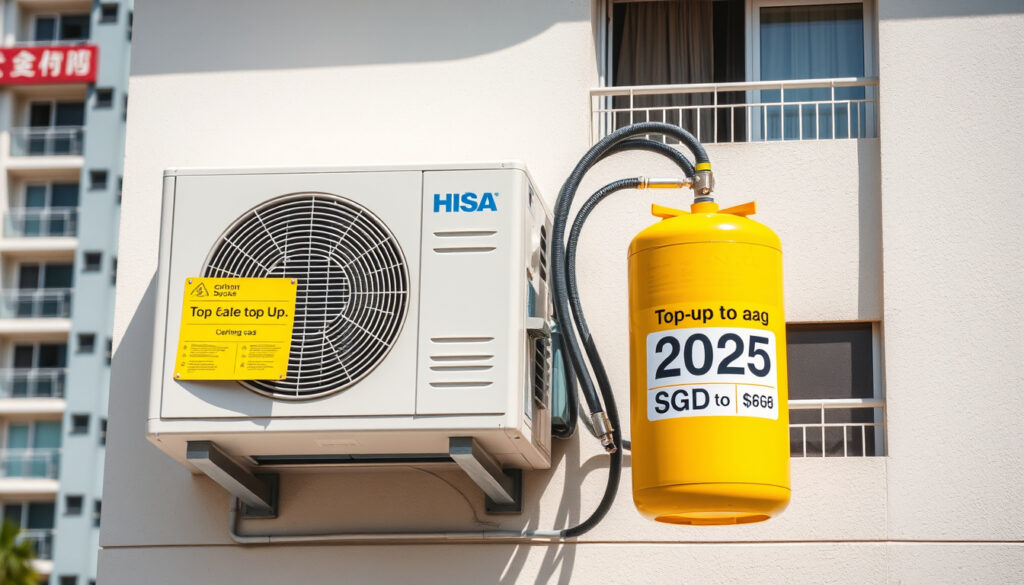
Aircon Gas Top Up Price – 2025 Costs in Singapore
When an air conditioning system stops cooling effectively, low refrigerant levels are often the cause. Aircon gas top-up services—also referred to as regas or recharge procedures—restore proper refrigerant levels and return systems to expected performance. Understanding the costs involved helps property owners budget appropriately and avoid unexpected expenses.
In Singapore, aircon gas top-up prices typically range between S$40 and S$220 per unit, depending on the refrigerant type, system size, and service provider. Car air conditioning systems generally cost less than home units, with R134a refrigerant being the standard for most vehicles. Professional services are universally recommended over DIY approaches due to the complexity of leak detection and proper refrigerant handling.
This guide breaks down current pricing structures, explains the factors that influence costs, and provides practical advice for homeowners and vehicle owners seeking aircon gas top-up services in Singapore.
How Much Does Aircon Gas Top Up Cost?
Aircon gas top-up costs in Singapore vary considerably based on several key variables. The type of refrigerant used in a system represents the most significant price determinant, with newer eco-friendly refrigerants commanding higher prices than older formulations. Understanding these ranges helps consumers make informed decisions when requesting quotes from service providers.
S$50–S$150
R134a, R410A, R32
30–60 minutes
Professional service
The typical cost for car air conditioning regas falls between S$60 and S$80 for standard R134a systems, though luxury vehicles may incur higher charges depending on workshop pricing structures. Home air conditioning units generally require higher expenditures, with most residential services falling within the S$50 to S$150 range.
Service packages that bundle gas top-up with chemical overhauls often include complimentary top-ups worth S$120 or more, offering better value than standalone refills. Providers such as Socool Aircon and Affordable Aircon frequently advertise such bundled offers.
Key Factors That Affect Aircon Gas Top Up Price
Several interconnected factors determine the final cost of any aircon gas top-up service. Recognising these variables enables consumers to understand why quotes may differ between providers and helps identify potential areas for cost savings.
- Refrigerant Type and Availability: R32 refrigerant costs more than R22 due to stricter environmental regulations and limited supply chains. Newer refrigerants generally command premium pricing across all service providers.
- Unit Size and BTU Rating: Larger residential split units, multi-split configurations, and commercial systems require more refrigerant. Small home units typically cost S$50–S$80, while larger systems range from S$100–S$150.
- Extent of Gas Loss: Minor top-ups for slight depletion cost less than major refills following significant leaks. Major gas loss situations often require repairs before refilling, adding additional fees to the service.
- Service Provider: Expertise level, equipment quality, warranty provisions, and additional services like system flushing all influence pricing. Comparing multiple quotes remains advisable.
- Inclusion of Leak Detection: Many providers bundle basic leak checks with top-up services, often backed by 90-day warranties. Standalone leak detection adds approximately S$20 to overall costs.
Prices remain relatively stable heading into 2026, with no major increases projected based on current market conditions in Singapore.
Average Costs by Refrigerant Type
| Refrigerant Type | Typical Price Range (S$) | Common Application | Notes |
|---|---|---|---|
| R22 (older units) | $30–$155 | Phasing out due to environmental regulations | Supply-limited; prices may rise long-term |
| R410A (newer home/office) | $60–$165 | Standard for efficiency-focused systems | Widely available; 2025 estimates S$100–S$200 |
| R32 (eco-friendly models) | $80–$220 | High-efficiency modern systems | Most expensive due to regulations and performance requirements |
| R134a (vehicles) | $60–$80+ | Automotive air conditioning | Higher charges for luxury vehicles; quotes vary by workshop |
What Type of Gas Is Used for Aircon Top Up?
Air conditioning systems rely on specific refrigerant gases to absorb and release heat, enabling the cooling cycle. The choice of refrigerant depends on the system’s design, age, and environmental considerations. Each type offers distinct characteristics that affect both performance and service costs.
Understanding Refrigerant Types
Modern air conditioning systems utilise several refrigerant types, each with specific properties suited to different applications. R410A has become the standard for newer residential and commercial units in Singapore due to its superior energy efficiency and lower environmental impact compared to older refrigerants. R32 represents the latest generation, offering even better thermal properties and reduced global warming potential.
Vehicle air conditioning systems predominantly use R134a, a refrigerant specifically formulated for automotive applications. Some newer vehicles are transitioning to R1234yf, though this change remains less common in the Singapore market. Understanding which refrigerant your system uses is essential for obtaining accurate quotes, as mixing incompatible refrigerants can cause system damage.
The refrigerant type for your aircon system is typically listed on a label attached to the outdoor unit. For vehicles, consult the owner’s manual or check the sticker under the bonnet. Using the wrong refrigerant type can damage components and void warranties.
Is Aircon Gas Top Up the Same as Regas?
The terms “gas top-up,” “regas,” and “recharge” are often used interchangeably in the aircon service industry. All three describe the process of restoring refrigerant levels to manufacturer specifications. The terminology reflects different regional preferences rather than distinct procedures.
A complete regas procedure involves more than simply adding refrigerant. Professional technicians first check for leaks, repair any damage found, evacuate the system with a vacuum pump to remove moisture and non-condensable gases, and then refill to the precise amount specified by the manufacturer. This comprehensive approach ensures the system operates efficiently and prevents premature failure.
Can I Top Up Aircon Gas Myself or Need a Professional?
The question of DIY versus professional service arises frequently among property owners seeking to minimise costs. While DIY refrigerant kits are available in some markets, professional services are overwhelmingly recommended by industry experts and supported by service providers across Singapore.
Why Professional Service Is Advised
Professional technicians bring specialised equipment and expertise that most consumers lack. Proper leak detection requires electronic sniffers, ultraviolet dyes, or pressure testing—tools that identify the source of gas loss accurately. Without identifying and repairing leaks, simply adding refrigerant provides only temporary relief, with the problem recurring within weeks or months.
The regas process itself involves handling refrigerants under high pressure, requiring specialised certification in many jurisdictions. Improper handling poses safety risks and can cause personal injury. Additionally, DIY attempts frequently result in overfilling or underfilling, both of which compromise system efficiency and may cause permanent damage.
Attempting to handle refrigerants without proper training and equipment can result in chemical burns, system damage, or voided warranties. Professional aircon technicians undergo specific training to handle refrigerants safely and comply with environmental regulations governing their disposal.
Where to Get Aircon Gas Top Up Service
Singapore offers numerous aircon service providers ranging from large established companies to independent technicians. Recommended sources include specialist aircon companies, automotive workshops for vehicle systems, and marketplace platforms where individual providers advertise services. Professional workshop services dominate recommendations due to their ability to perform comprehensive leak detection and provide service warranties.
For the best outcomes, obtain quotes from at least three different providers before committing to a service. Ask about warranty provisions, included leak checks, and the specific refrigerant type they will use. Transparent providers will readily share this information, while vague quotes may indicate hidden costs or substandard practices.
Regarding Malaysia pricing, no direct comparative data was available at time of publication. Singapore pricing trends may apply regionally, but consumers should confirm rates with local service providers before arranging work across borders.
How Long Does Aircon Gas Top Up Last?
A properly performed gas top-up, combined with effective leak repair, should restore your air conditioning system to reliable operation for an extended period. Understanding the expected lifespan of a top-up helps property owners recognise when additional service may be necessary.
Expected Duration Between Top-Ups
Well-maintained air conditioning systems with no underlying leaks can operate for one to three years between refrigerant top-ups. Natural depletion is minimal in sealed systems, meaning refrigerant loss primarily indicates leakage somewhere in the system. The wide timeframe reflects differences in system quality, installation practices, and environmental factors.
Regular annual maintenance significantly extends intervals between required top-ups. During routine servicing, technicians can identify and address minor leaks before they develop into major problems requiring extensive repairs. This proactive approach reduces long-term costs and maintains consistent cooling performance throughout the year.
Signs That Your Aircon Needs Attention
- Reduced cooling performance despite normal thermostat settings
- Unexplained increases in electricity consumption
- Ice formation on refrigerant lines or evaporator coils
- Unusual hissing or bubbling sounds from indoor or outdoor units
- Warm air blowing from vents when cooling is selected
When these symptoms appear, arranging a professional inspection promptly prevents further damage and potentially costly emergency repairs. Ignoring warning signs typically leads to more severe problems, including compressor failure, which can cost significantly more to rectify than routine maintenance.
Scheduling annual aircon servicing before the peak summer season ensures optimal performance when cooling demand is highest. Many providers offer maintenance packages that include refrigerant checks as part of comprehensive cleaning and inspection services.
What If There Is a Leak During Top Up?
Discovering a refrigerant leak during service is a common occurrence that professional technicians are trained to handle. The standard procedure involves locating the leak, assessing its severity, and determining whether repair is feasible or if component replacement is necessary.
Minor leaks in accessible locations can often be repaired on-site using sealants or by replacing damaged components such as Schrader valves or connection fittings. Major leaks, particularly those involving corroded coils, may require more extensive work that extends beyond a standard top-up appointment.
Professional service providers typically include leak detection in their standard procedure, often backed by warranties that guarantee repair quality. This integrated approach distinguishes professional service from DIY attempts, which rarely address underlying leak issues effectively.
Typical Service Timeline for Aircon Gas Top Up
Understanding what to expect during the service process helps consumers plan appropriately and recognise when the procedure deviates from standard expectations. The typical aircon gas top-up process follows a predictable sequence that experienced technicians complete efficiently.
- Initial Assessment: Technician examines the system, reviews symptoms reported by the owner, and performs preliminary checks to confirm low refrigerant levels. This phase typically takes 10–15 minutes.
- Leak Detection: Using specialised equipment, the technician locates the source of refrigerant loss. Electronic sniffers, UV dyes, or pressure testing methods identify leaks in lines, connections, or components.
- Leak Repair: If leaks are found, the technician repairs or replaces affected components. Simple repairs may be completed immediately, while complex issues require additional time or a follow-up appointment.
- System Evacuation: The refrigerant system is evacuated using a vacuum pump to remove existing gas, moisture, and non-condensable substances. This critical step ensures system purity before refilling.
- Refrigerant Recharge: Fresh refrigerant is added to the precise amount specified by the manufacturer. The technician verifies correct charging by checking temperature differentials and system pressures.
- Final Verification: The system operates for a test period to confirm proper cooling performance. The technician reviews findings with the property owner and provides recommendations for ongoing maintenance.
The complete procedure typically requires 30 to 60 minutes, depending on whether repairs are necessary and the complexity of the system. Vehicle aircon regas services often complete slightly faster, while commercial systems or those requiring extensive repairs may take longer.
What Is Established Versus Uncertain Information
Reviewing the available research reveals clear patterns in certain areas while highlighting gaps that warrant further investigation. This assessment helps readers understand the reliability of information presented in this guide and identify areas where additional research may be beneficial.
| Established Information | Areas of Uncertainty |
|---|---|
| Singapore pricing ranges from S$40–S$220 for home units | Specific Malaysia pricing data unavailable |
| Car regas costs S$60–S$80 for standard R134a systems | Transition rates to newer automotive refrigerants |
| R410A and R32 are standard for newer home systems | Long-term R22 availability projections |
| Professional service recommended over DIY approaches | Impact of upcoming refrigerant regulations on pricing |
| Well-maintained systems last 1–3 years between top-ups | Precise refrigerant requirements for all unit models |
| Prices stable into 2026 with no major increases projected | Regional supplier availability variations |
Understanding Aircon Gas Top Up Costs in Context
Aircon gas top-up services represent an essential maintenance expense for both residential and automotive cooling systems. The cost variations documented across refrigerant types and service providers reflect genuine differences in technology, regulatory requirements, and market competition rather than arbitrary pricing.
Singapore’s warm climate makes functional air conditioning critical for comfort and productivity, particularly during periods of intense heat. The investment in professional gas top-up services protects more expensive components such as compressors and evaporators from damage caused by improper refrigerant handling or unresolved leaks.
Environmental considerations increasingly influence refrigerant availability and pricing. Older refrigerants like R22 face phase-out schedules under international agreements, gradually reducing supply and increasing costs. Newer refrigerants like R32 offer better environmental profiles but require careful handling by trained professionals due to their specific operating characteristics.
For property owners evaluating whether to invest in professional services, the long-term cost-benefit strongly favours expert handling. While DIY kits may seem economical initially, the risks of improper handling, voided warranties, and unresolved leaks typically exceed any short-term savings. Professional service providers offer accountability, expertise, and warranty protection that DIY approaches cannot match.
“Proper refrigerant handling requires specialised equipment and training. Attempting to cut costs through DIY methods often results in higher expenses when professional repairs become necessary after botched attempts.”
— Industry guidance from multiple Singapore aircon service providers
Summary and Key Takeaways
Aircon gas top-up prices in Singapore reflect the type of refrigerant, system size, extent of required work, and service provider selected. Home air conditioning units typically cost between S$50 and S$150 per service, while car aircon regas generally ranges from S$60 to S$80. Professional services are strongly recommended over DIY approaches due to the necessity of proper leak detection, refrigerant handling, and system verification.
Well-maintained systems without underlying leaks require top-ups only every one to three years, making regular annual servicing a cost-effective strategy for preserving cooling performance and extending equipment lifespan. When selecting a service provider, obtaining multiple quotes and verifying warranty provisions helps ensure value for money.
For readers exploring related topics, comprehensive guides on Video Wall Digital Signage Singapore – Providers, Costs and Installation Guide and Indoor Team Building Activities Singapore – Venues, Costs, Ideas provide additional context for technology and facilities planning in Singapore.
Frequently Asked Questions
How much gas is typically needed for an aircon top up?
Most residential split air conditioning units require between 300 and 500 grams of refrigerant, though exact amounts vary by unit size, model, and manufacturer specifications. The technician adds the precise amount determined necessary during pressure testing.
What should I do if a leak is discovered during the top-up process?
Allow the technician to repair the leak before proceeding with the refill. Professional providers include leak detection and repair as part of their standard service. Attempting to bypass repairs and simply add refrigerant results in repeated losses and potentially costly future damage.
How often should home air conditioning units receive professional servicing?
Annual professional servicing is recommended for most home air conditioning systems. This routine maintenance identifies potential issues early, maintains efficiency, and can prevent the need for emergency top-ups or repairs during peak usage periods.
Are bundle packages better value than standalone top-up services?
Bundle packages that combine gas top-up with chemical overhauls or general servicing often include complimentary top-ups worth S$120 or more. These packages typically offer better overall value than purchasing each service separately.
Do car and home aircon use the same refrigerant types?
No. Car air conditioning systems predominantly use R134a refrigerant, while home units commonly use R410A or R32. Using the wrong refrigerant type can damage the system and void warranties. Always specify your system type when requesting quotes.
What warranty should I expect from professional gas top-up services?
Many Singapore service providers offer 90-day warranties on gas top-up services, particularly when accompanied by leak detection and repair. Warranty terms vary between providers, so confirm specific coverage before committing to a service.
Can I switch from R22 to a newer refrigerant in my older aircon unit?
Retrofitting older units to use newer refrigerants is technically possible in some cases but requires professional assessment. The feasibility depends on the unit’s condition, compatibility, and whether the change offers meaningful benefits. Consult a qualified technician before pursuing refrigerant conversions.
More related posts
 Arsenal F.C. vs West Ham Stats: H2H Record & Predictions
 Spiderman Into The Spider Verse – Review and Analysis
 Fix ‘Your Organization’s Data Cannot Be Pasted Here’ Error
 National Dental Centre Singapore Reviews – Ratings, Costs, Experiences
 A-Level Results 2025: Key Stats and Trends
 Joint & Y Enterprise: Singapore Uniforms & Tailoring
 Itamar Ben-Gvir: Verified Facts, Role & Latest News
 How to Hang Shelves: Beginner Guide, No Drill, Brackets