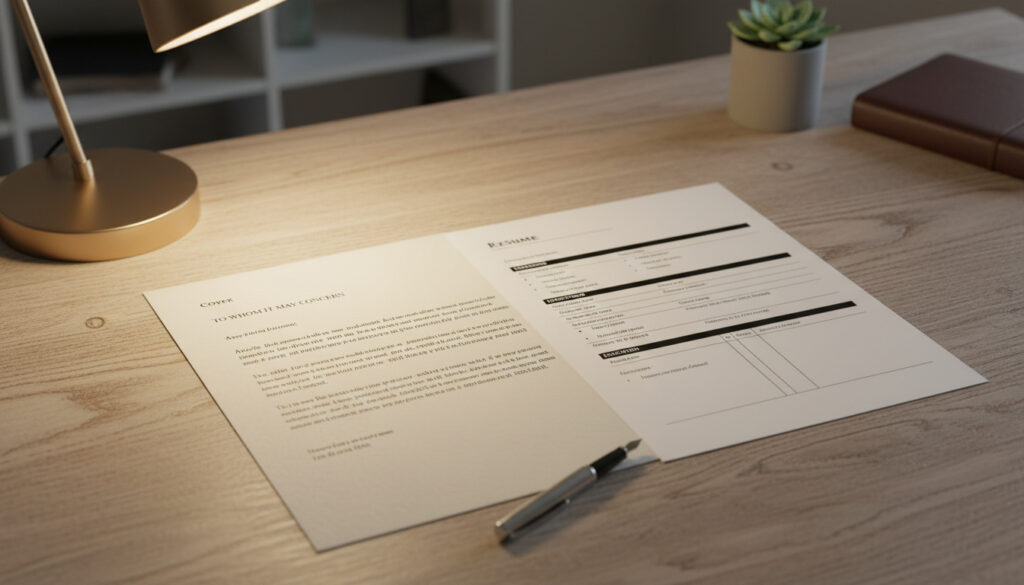
What Is a Cover Letter – Definition, Purpose, Vs Resume and Tips
A cover letter is a brief, customized document typically spanning three to four paragraphs and submitted alongside a resume to introduce a candidate to potential employers. It serves to explain specific interest in a position, connect relevant skills and experiences to job requirements, and demonstrate cultural fit with the organization, according to definitions provided by Furman University.
Unlike the structured, scannable format of a resume, the cover letter operates as a narrative complement. It transforms factual achievements into contextual stories that reveal personality, motivation, and research into the specific company and role, as noted by career resource Teal.
Understanding the distinction between these application components and mastering the construction of compelling cover letters remains essential for candidates navigating competitive labor markets, particularly as automated screening systems and evolving hiring practices reshape recruitment workflows.
What Is a Cover Letter?
1-page introductory document submitted with resume
Showcase fit, enthusiasm, and company knowledge
250-400 words (3-4 paragraphs)
PDF with standard professional fonts
- Customization to specific job postings significantly increases interview likelihood, particularly when cover letters are listed as optional
- Narrative storytelling distinguishes candidates from resumes listing only factual achievements
- Integration of keywords from job descriptions aids applicant tracking system compatibility
- Recruiters typically spend mere seconds on initial application reviews
- Professional formatting with standard fonts ensures machine readability
- Connection between past experiences and future employer needs drives engagement
- Well-crafted letters prompt deeper review of accompanying resumes
| Element | Details | Best Practice |
|---|---|---|
| Header | Contact info, date, employer details | Align left, include accurate current information |
| Salutation | Greeting to hiring manager | Research and use specific name; “Dear [Name]” |
| Introduction | Position reference, discovery method, hook | State role clearly, show immediate enthusiasm |
| Body | 2-3 paragraphs connecting experience to requirements | Use specific examples not detailed in resume |
| Company Connection | Reference to culture, goals, or values | Demonstrate specific research conducted |
| Conclusion | Reiterate fit, express interview interest | Include clear call to action |
| Sign-off | Professional closing | “Sincerely,” followed by full name |
Cover Letter vs. Resume: Key Differences
The relationship between these documents is complementary yet functionally distinct. Lanteria distinguishes the resume as a structured, scannable one-to-two-page list of factual achievements, skills, education, and work history.
Structural and Formatting Distinctions
Cover letters utilize flowing narrative across three to four paragraphs with a conversational tone. Resumes employ bullet points and short phrases across one to three pages, designed for rapid scanning by recruiters and automated systems. Resumes prioritize factual density; cover letters prioritize narrative coherence.
Functional Purposes
The cover letter explains why a candidate wants this specific job at this specific company, telling a story that links background to organizational needs while displaying personality. Indeed notes that resumes prove qualifications with measurable results, providing a quick career overview for initial screening purposes.
Content Focus and Directionality
Cover letter content remains specific to the job posting and future-oriented, explaining how the candidate will contribute and expand upon resume facts with motivation and examples. Resume content presents broad professional history, past achievements, skills, and education without narrative elaboration.
Cover letters enhance resumes by adding interpretive depth. A resume bullet stating “Led 10 projects at 98% success rate” transforms within a cover letter into a narrative explaining how that specific experience directly addresses the employer’s stated operational needs.
What Should a Cover Letter Include?
Effective cover letters follow standardized structural conventions while allowing customization for specific roles and industries.
Essential Structural Components
Every cover letter requires a header containing accurate contact information, the date, and employer details. The salutation should address a specific hiring manager by name whenever possible. Research from Furman University emphasizes that finding the hiring manager’s name demonstrates initiative and attention to detail.
The introduction must state the specific position, how the candidate discovered the opening, and present a compelling hook demonstrating enthusiasm or a key qualification. The body comprises two to three paragraphs connecting one to two specific experiences to job requirements while referencing company culture, goals, or recent developments. The conclusion reiterates fit, expresses specific interest in an interview, and includes a professional sign-off.
Length and Formatting Specifications
Standard length ranges from 250 to 400 words, typically filling half to one page. This brevity respects recruiter time constraints while providing sufficient space for meaningful narrative development. Documents should use standard fonts such as Arial or Times New Roman to ensure compatibility with applicant tracking systems.
Use standard fonts, avoid tables and graphics, incorporate job description keywords naturally, and save documents as PDF unless the posting specifies otherwise. Teal recommends mirroring language from the job description to improve matching algorithm performance.
Common Errors to Avoid
Candidates should avoid repeating resume content verbatim, submitting generic letters lacking company-specific research, exceeding optimal length, or containing grammatical and spelling errors. Furman University research indicates that ignoring company research or failing to connect skills to specific organizational needs significantly reduces callback rates.
Submitting identical cover letters across multiple applications without customization fails to demonstrate genuine interest and typically results in immediate disqualification during screening processes.
How to Write an Effective Cover Letter
Systematic preparation and execution produce cover letters that advance candidates to interview stages.
Pre-Writing Research
Thorough investigation of the company and specific role forms the foundation of effective letters. Candidates should identify organizational culture, recent achievements, and specific departmental needs to demonstrate informed interest.
Narrative Construction
Transform resume facts into contextual stories. Rather than restating “Managed team of five,” explain how that management experience developed specific capabilities that address the target role’s leadership requirements. Maintain a personal, engaging tone while preserving professional boundaries.
Quality Assurance Protocols
Review for concision, passion, and error-free presentation. Customize each application individually; generic letters fail to distinguish candidates in competitive markets. Academic resources confirm that tailoring both documents to job descriptions using relevant keywords maximizes relevance scores in automated systems.
When Does a Cover Letter Enter the Hiring Process?
- Role Identification: Candidate identifies suitable position through job boards, company websites, or referrals
- Document Preparation: Resume and customized cover letter are prepared specifically for the identified role
- Application Submission: Both documents are submitted simultaneously through designated portals or email
- Initial Screening: Applicant tracking systems parse documents for keyword matches and formatting compliance
- Recruiter Review: Hiring managers spend seconds reviewing the cover letter to determine resume depth review
- Interview Selection: Compelling cover letters prompt deeper resume analysis and interview invitations
Established Standards and Variable Practices
| Established Information | Uncertain or Variable Elements |
|---|---|
| Optimal length is 250-400 words across 3-4 paragraphs | Whether specific technology sector roles require cover letters when listed as optional |
| Documents must complement rather than duplicate resume content | Precise quantitative weight assigned during AI-driven screening algorithms |
| Personalization and company knowledge significantly impact success rates | 2025-specific statistical data on cover letter impact (current sources lack recent year-specific metrics) |
| Resumes remain essential for nearly all applications | Exact threshold of keyword density required for ATS approval |
The Role of Cover Letters in Modern Recruitment
Cover letters function as critical differentiators in automated hiring environments. While applicant tracking systems scan resumes for specific qualifications, the cover letter provides the human connection that prompts recruiters to invest time in detailed candidate evaluation. Lanteria observes that strong letters make recruiters delve deeper into accompanying resumes.
The distinction between presentation styles mirrors broader professional communication norms. Just as What Is Smart Casual – Attire Guide for Men and Women clarifies nuanced dress codes that vary by context, cover letters navigate the space between rigid qualification lists and interpersonal professional introduction.
Global practices remain largely consistent regarding the narrative versus factual split, though some regions utilize curriculum vitae formats instead of resumes while maintaining similar cover letter conventions. The fundamental purpose—establishing human connection amidst standardized qualification data—transcends regional variations.
Professional Perspectives
Recruiters value personalization, company knowledge, and specific examples over mere repetition of resume information. Well-crafted cover letters boost interview chances by grabbing attention and proving fit, especially when submission is listed as optional.
— Career Development Research, Furman University
The cover letter serves as a narrative complement to structured resume data, explaining why you want this job at this company and telling a story that links your background to their specific needs.
— Employment Strategy Analysis, Teal
Core Principles for Job Seekers
Mastering the cover letter requires understanding its role as a strategic narrative document that interprets resume data for specific organizational contexts. Candidates should research thoroughly, customize extensively, maintain concise professional formatting, and view the document as an opportunity to demonstrate communication competence and genuine interest. For those pursuing advanced credentials to strengthen their applications, reviewing Delft University of Technology – 2025 Rankings and Programs provides insight into educational pathways that enhance resume and cover letter competitiveness.
Frequently Asked Questions
Do you need a cover letter for every job application?
Not always required, but inclusion is best practice. Cover letters demonstrate eagerness and help candidates stand out in competitive markets, particularly when optional. Resumes remain essential for nearly all applications.
Can I use the same cover letter for multiple positions?
No. Generic letters fail to demonstrate specific interest or company knowledge. Each application requires customization connecting your experience to that specific role’s requirements.
What file format should I use for a cover letter?
Save as PDF unless the job posting specifies otherwise. PDF preserves formatting across devices and operating systems, ensuring your presentation appears as intended.
How do I address a cover letter without a hiring manager’s name?
Research the name through company websites, LinkedIn, or professional networks. If unavailable after reasonable effort, use “Dear Hiring Manager” rather than outdated generic salutations.
Should cover letters mention salary expectations?
Generally no, unless specifically requested in the job posting. Salary discussions typically occur during interview phases after mutual interest is established.
Is a cover letter necessary for entry-level positions?
Yes. Entry-level candidates particularly benefit from cover letters explaining how academic projects, internships, or transferable skills apply to the target role despite limited professional experience.