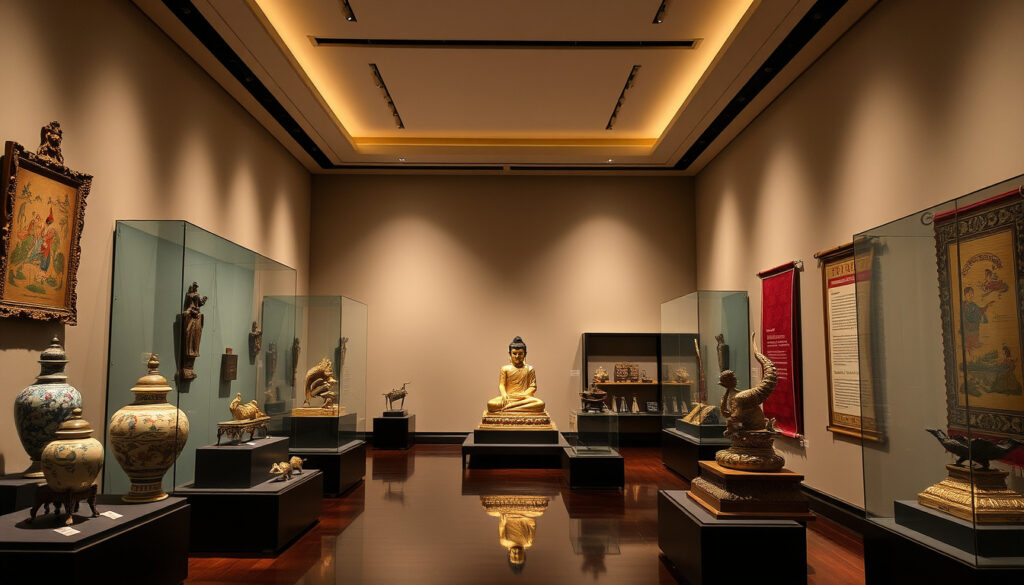
Asian Civilisations Museum Photos: Gallery, Guide & Tips
If you’ve ever wandered the Singapore River and spotted a stately colonial building glowing in the evening light, you’ve probably photographed it without knowing its story. That building houses the Asian Civilisations Museum (ACM) — and it’s packed with over 1,300 artefacts spanning 5,000 years of Asian history. Most visitors walk right past it, but the photos they miss are anything but ordinary.
Year Built: 1867 ·
Permanent Gallery Themes: 3 cross-cultural pan-Asian ·
Stock Photos Available: 193 on Getty ·
Instagram: @acm_sg ·
MRT Access: Raffles Place (Exit H), 5-minute walk
Quick snapshot
- Built 1867, formerly housed government offices (HomeJourney)
- 3 permanent gallery themes across 14,000 sqm (NHB Galleries Overview)
- Free for Singapore Citizens & PRs year-round (HomeJourney)
- 193+ stock photos on Getty Images (Getty Images)
- Let’s Play! exhibition opens 5 Sep 2025 (National Heritage Board)
- Whether the “60-90 rule” applies to ACM ticketing (paa-based query, not confirmed in research)
- Exact former name of the building pre-renovation (multiple colonial-era references, no definitive citation)
- Current 2026 ticket prices post-exhibition changes (varies by channel)
- Apr 2020: Level 3 Materials & Design galleries refreshed (SilverKris)
- May 2024–Jun 2025: Pagoda Odyssey 1915 exhibition (SilverKris)
- 28 Jan 2026: Garden of Senses: A Tea Reverie opens (National Heritage Board)
- 7 Jun 2026: Multiple exhibitions close (SilverKris)
- Let’s Play! (Asian Games design) runs Sep 2025–Jun 2026 (National Heritage Board)
- Up Close with ACM: selected Saturdays Apr 2025–Feb 2026 (National Heritage Board)
| Detail | Value | Source |
|---|---|---|
| Location | 1 Empress Place, Singapore 179555 | NHB Plan Your Visit |
| Built | 1867 | HomeJourney |
| Operator | National Heritage Board (NHB) | National Heritage Board |
| Daily Hours | 10:00am–7:00pm | NHB Official |
| Friday Hours | 10:00am–9:00pm | NHB Official |
| Gallery Themes | 3 cross-cultural pan-Asian | NHB Galleries Overview |
| Artefacts | 1,300+ across 14,000 sqm | HomeJourney |
| Guided Tour | 45-60 min, free, multiple languages | NHB Guided Tours |
| Photo Sources | Getty (193+), Instagram @acm_sg | Getty Images |
| MRT Access | Raffles Place (Exit H), 5-minute walk | NHB Plan Your Visit |
Why is the Asian Civilisations Museum unique?
Singapore has no shortage of museums, but the ACM occupies a distinct niche: it’s the only museum in the region devoted entirely to exploring the artistic heritage of Asia from a pan-Asian perspective (Visit Singapore). Rather than siloing cultures, it weaves together China, Southeast Asia, South Asia, and West Asia through shared themes of trade, faith, and craftsmanship.
Gallery themes
The permanent galleries are organized across three floors by theme, not by geography:
- Level 1 — Trade and Maritime Silk Routes: Highlights maritime trade routes, the famous Tang Shipwreck collection (9th-century ceramics), and Asian export art (NHB Galleries Overview). The outside sculptures “People of The River” depict 19th-century colonial Singapore life, giving visitors a visual anchor before they even enter (Visit Singapore).
- Level 2 — Faith and Belief: Covers Ancestors, Rituals, and Belief systems spanning China, Southeast Asia, and South Asia (HomeJourney). Interactive multimedia showcases bring ancient religious practices to life.
- Level 3 — Materials and Design: Ceramics, Fashion & Textiles, and Jewellery galleries refreshed and reopened in April 2020 (SilverKris). A standout piece: a ginger root-form teapot that caught attention among the five astonishing artefacts in the refreshed galleries.
The cross-cultural gallery design means you can trace how a single motif — say, a dragon — evolved differently across China, Southeast Asia, and South Asia, all within a single floor. That’s something no single-country museum can replicate.
Historical building
The ACM occupies the Empress Place Building, a neoclassical colonial structure built in 1867 — one of the oldest colonial-era buildings still standing in Singapore (HomeJourney). Its riverside location near the Singapore River gives it an atmospheric setting that photographs beautifully, especially at golden hour when the sandstone façade glows against the water.
How long do you need in Asian Civilisations Museum in Singapore?
The answer depends on how deep you want to go. For the main permanent galleries, budget 2–3 hours (HomeJourney). If you’re also catching a special exhibition, add another hour. Casual visitors who just want highlights can probably do it in 90 minutes, but they’ll miss the best photo opportunities in the upper galleries.
Recommended visit duration
- Quick visit (60–90 min): Focus on Level 1 Trade galleries and the Tang Shipwreck, plus outdoor sculptures. Enough for one impressive Instagram post.
- Standard visit (2–3 hours): Covers all three floors with time to linger at interactive exhibits and read gallery labels.
- Deep dive (4+ hours): Add a guided tour (45–60 minutes, free, available daily in multiple languages including English, Mandarin, and Japanese (NHB Guided Tours)) plus time in special exhibitions.
Friday evenings are the insider hack: hours extend to 9:00pm (NHB Official), crowds thin out, and the riverfront lighting makes the exterior shots look cinematic. You can register for same-day guided tours at the Visitor Services Counter (NHB Guided Tours).
Key areas to see
Five spots that generate the most photo interest, according to visitor feedback patterns:
- The Tang Shipwreck showcase on Level 1 — 9th-century ceramics recovered from a seabed, displayed with dramatic lighting
- The Level 3 Materials & Design galleries (refreshed 2020) — ceramics and textiles that photograph well under museum lighting
- Outdoor sculptures “A Great Emporium” and “People of The River” — coolies and colonial-era figures that tell a story without entering
- The river-facing windows on Level 2 — panoramic shots of the Singapore River andCBD skyline
- The interactive multimedia stations on each floor — popular with visitors and great for documenting engagement
What is the oldest museum in Singapore?
The ACM’s Empress Place Building was constructed in 1867, making it one of the oldest surviving colonial-era buildings in Singapore’s civic district (HomeJourney). The National Museum of Singapore, housed in a building dating to 1887, was built two decades later. So depending on how you define “oldest,” the ACM either holds the title outright or shares a podium with older structures repurposed into museums.
Asian Civilisations Museum history
The Empress Place Building originally served as government offices before its conversion to museum use. The ACM specializes in the material history of Asia, holding artefacts from China, Southeast Asia, South Asia, and West Asia (Wikipedia). As part of the National Heritage Board’s four-museum network (which also includes the Peranakan Museum, National Museum, and Singapore Art Museum), it occupies a specific niche: pan-Asian cross-cultural storytelling rather than single-culture focus.
Comparison to National Museum
- Age of building: ACM (Empress Place) predates the National Museum by ~20 years — 1867 vs. 1887
- Scope: ACM covers pan-Asian material culture; National Museum focuses on Singapore’s social history
- Location: Both in the Civic District, riverside vs. inland Stamford Road
The catch: building age doesn’t necessarily translate to collection age or curatorial depth. The National Museum has been operating as a museum longer, while the ACM’s current incarnation as a dedicated Asian civilisations museum is a more recent institutional identity.
What museum is best in Singapore?
Tripadvisor consistently ranks the ACM in the top 10 attractions in Singapore, but calling any single museum “best” misses the point — each has a distinct personality. The ACM stands out for its pan-Asian scope and cross-cultural gallery design (Visit Singapore), while the Peranakan Museum nearby offers deep-dive specificity on one culture.
Top museums list
- National Museum of Singapore — social history, iconic rotunda
- Asian Civilisations Museum — pan-Asian material culture, riverside location
- Peranakan Museum — Peranakan heritage, NHB sibling
- ArtScience Museum — iconic architecture, contemporary exhibitions
- National Gallery Singapore — Southeast Asian modern art
ACM ranking
The ACM holds its own through three differentiators: thematic gallery organization (Trade → Faith → Materials, not country-by-country), the historic Empress Place Building setting, and upcoming exhibition programming like Let’s Play! (Sep 2025–Jun 2026) that keeps the calendar fresh (National Heritage Board). Visitor reviews frequently mention the “immersive” quality of the multimedia exhibits and the unexpected depth of the permanent collections.
The ACM’s pan-Asian breadth means it covers more ground but with less depth per culture compared to single-culture museums. If you want shallow-but-wide Asian overview, it’s ideal. If you want deep expertise on one tradition, look elsewhere.
The pattern: visitors who appreciate cross-cultural connections rate ACM highly, while those seeking deep dives into a single culture often prefer the Peranakan Museum next door.
Asian Civilisations Museum opening hours
Standard hours are 10:00am–7:00pm daily, with Friday evenings extended to 9:00pm (National Heritage Board). Admission ends 30 minutes before closing.
The nearest MRT station is Raffles Place (Exit H), a 5-minute walk away (NHB Plan Your Visit). This makes the museum accessible for a quick visit combined with other riverside attractions.
Tickets and access
- Singapore Citizens & PRs: Free admission to permanent galleries year-round (HomeJourney)
- Foreign visitors: Around S$15–S$20 for permanent galleries, varying by channel and exhibitions (HomeJourney)
- Children 6 and below: Free; student and senior concessions available
- Special exhibitions: May require separate ticketing — check NHB site for Garden of Senses (28 Jan–7 Jun 2026) and Let’s Play! (5 Sep 2025–7 Jun 2026) pricing
Virtual tours are available online for permanent galleries (NHB Plan Your Visit), useful for previewing galleries before a physical visit or for those who can’t attend in person.
Things to do
- Register for daily guided tours (45–60 min, free, multiple languages) at the Visitor Services Counter on the day (NHB Guided Tours)
- Attend Up Close with ACM events — selected Saturdays from 26 Apr 2025 to 28 Feb 2026, 2pm–3:30pm (National Heritage Board)
- Photograph outdoor sculptures and riverside views (free, no ticket required)
- Explore the tea exhibition “Garden of Senses: A Tea Reverie” (28 Jan–7 Jun 2026) for immersive cultural programming (National Heritage Board)
The pattern: free daily tours + free outdoor sculptures + free permanent gallery access for locals = high value even if foreign visitor admission costs S$15–S$20. The Friday evening extension is underutilized by tourists but perfect for those combining museum visits with riverside dining.
How to photograph the Asian Civilisations Museum
Whether you’re a tourist seeking Instagram content, a designer sourcing reference imagery, or a journalist documenting heritage sites, the ACM offers multiple photo opportunities — both inside and out. Getty Images hosts 193+ stock photos of the museum (Getty Images), while Alamy offers stock photos, vectors, and 360 images (Alamy). The museum’s Instagram account @acm_sg provides behind-the-scenes content and gallery shots.
Photography spots inside
- The Tang Shipwreck ceramics on Level 1 — dramatic lighting, deep colors
- The ginger root-form teapot on Level 3 — unusual shape, great macro potential
- Riverside windows on Level 2 — framing the Singapore River and skyline
- Multimedia interactive stations — documenting engagement and technology integration
Photography spots outside
- “A Great Emporium” sculpture depicting coolies — historical context, strong composition
- “People of The River” installation — 19th-century colonial life scenes
- Empress Place Building façade at golden hour — neoclassical architecture, sandstone tones
- Riverside promenade — CBD skyline backdrop, water reflections
Museum policy typically permits photography for personal use. For commercial licensing, check Getty and Alamy for existing images or contact NHB for custom shoots. The outdoor sculptures are visible without entering the museum, making them accessible even during private events.
Confirmed vs. unclear
Confirmed facts
- Built 1867 in Empress Place Building
- 3 cross-cultural gallery themes (Trade, Faith, Materials)
- 1,300+ artefacts across 14,000 sqm
- Free for Singapore Citizens & PRs
- 193+ Getty stock photos available
- Free daily guided tours (45–60 min, multilingual)
- Nearest MRT: Raffles Place (Exit H), 5-min walk
- Level 3 refreshed April 2020
- Let’s Play! exhibition: 5 Sep 2025–7 Jun 2026
- Garden of Senses: 28 Jan 2026–7 Jun 2026
- Phone: +65 6332 7798
What’s still unclear
- Exact former name of building pre-ACM (colonial-era references exist, no definitive citation)
- Whether “60-90 rule” in Singapore tourism applies specifically to ACM (paa-sourced question, unconfirmed)
- Current 2026 ticket prices post-exhibition changes
- Full accessibility details for wheelchairs/mobility impaired (not detailed in current research)
What visitors say
Travel through 5000 years of Asian cultures with the help of our friendly guides.
— ACM Visitor Services (National Heritage Board)
ACM is not only a must-visit attraction, but also a useful landmark if you are exploring nearby homes, hotels, or office spaces.
— HomeJourney Team (HomeJourney)
ACM’s newest opening builds on the Trade galleries on the first floor, and the Faith & Belief galleries on the second floor.
— SilverKris Editor (SilverKris)
This is the only museum in the region devoted to exploring the artistic heritage of Asia.
— Visit Singapore (Visit Singapore)
Summary
The Asian Civilisations Museum punches well above its footprint. Built in 1867, housed in a riverside colonial landmark, and curated around cross-cultural pan-Asian themes rather than single-country silos, it offers something no other Singapore museum does: a unified narrative of how Asian cultures traded, believed, and made things across 5,000 years and multiple civilizations. With free admission for locals, free daily multilingual tours, and a calendar packed with new exhibitions through 2026, the only reason to skip it is if you’re content with only seeing Singapore’s skyline from the other side of the river. For photographers, designers, and curious visitors willing to spend 2–3 hours, the ACM delivers material that’s both visually compelling and historically substantive — a rare combination in the museum landscape.
Related reading: Artemis Grill & Sky Bar Photos
primeaceslimousine.com, nhb.gov.sg, nhb.gov.sg, gettyimages.com
Fans of ACM’s pan-Asian treasures will find the Tokyo National Museum tickets equally useful for planning visits to Japan’s premier cultural repository.
Frequently asked questions
What is the 60-90 rule in Singapore?
The “60-90 rule” in Singapore tourism contexts is a general time-management guideline suggesting visitors allocate 60–90 minutes per major attraction to balance depth with breadth across multiple stops. The exact application to ACM visitor planning is not confirmed in current research.
What not to do in Singapore as a tourist?
General Singapore tourist guidelines include: don’t chew gum (banned), don’t jaywalk (heavy fines), don’t skip the air conditioning indoors (climate contrast is extreme), and don’t assume all museums are free — foreign visitors to ACM pay around S$15–S$20 for permanent galleries.
What was the Asian Civilisations Museum previously known as?
The ACM occupies the Empress Place Building (built 1867), which previously served as colonial government offices. The museum’s specific “previously known as” institutional name prior to its 1997 or later establishment as ACM is not definitively confirmed in current research sources.
How to get Asian Civilisations Museum tickets?
Singapore Citizens and PRs enter permanent galleries free year-round. Foreign visitors pay approximately S$15–S$20 at the door or through online channels (Klook, SINGCAT, Peatix, or the official NHB site). Special exhibitions may require separate ticketing.
What things to do in Asian Civilisations Museum?
Activities include: exploring three floors of cross-cultural galleries, joining free daily guided tours (45–60 min, multilingual), attending Up Close with ACM events on selected Saturdays (Apr 2025–Feb 2026), photographing outdoor sculptures, and visiting rotating exhibitions like Let’s Play! (Sep 2025–Jun 2026).
What is Asian Civilisations Museum tea exhibition?
The “Garden of Senses: A Tea Reverie” exhibition runs 28 January–7 June 2026 at ACM, exploring tea culture through immersive displays and interactive programming. It’s a special ticketed exhibition separate from permanent gallery access.
What are Asian Civilisations Museum reviews?
Visitor reviews on Tripadvisor consistently rank ACM in Singapore’s top 10 attractions. Common praise: cross-cultural gallery design, immersive multimedia exhibits, knowledgeable docents, and the riverside setting. Common critique: limited depth per culture compared to single-country museums.
More related posts
 How to Make a GIF from Video – Step-by-Step 2025 Guide
 Joint & Y Enterprise: Singapore Uniforms & Tailoring
 Best Indian Muslim Food Near Me in Cork – Halal Options
 Malaysia Passport Renewal Online: Step-by-Step Guide
 Organize a Potluck: Rules, Signup Sheets & Dish Ideas
 How to Preserve Fresh Flowers – Proven Tips to Extend Vase Life
 KPop Demon Hunters Merch: Where to Buy Official Clothes & Toys
 The Line Restaurant Reviews: Is Shangri-La’s Buffet Worth It