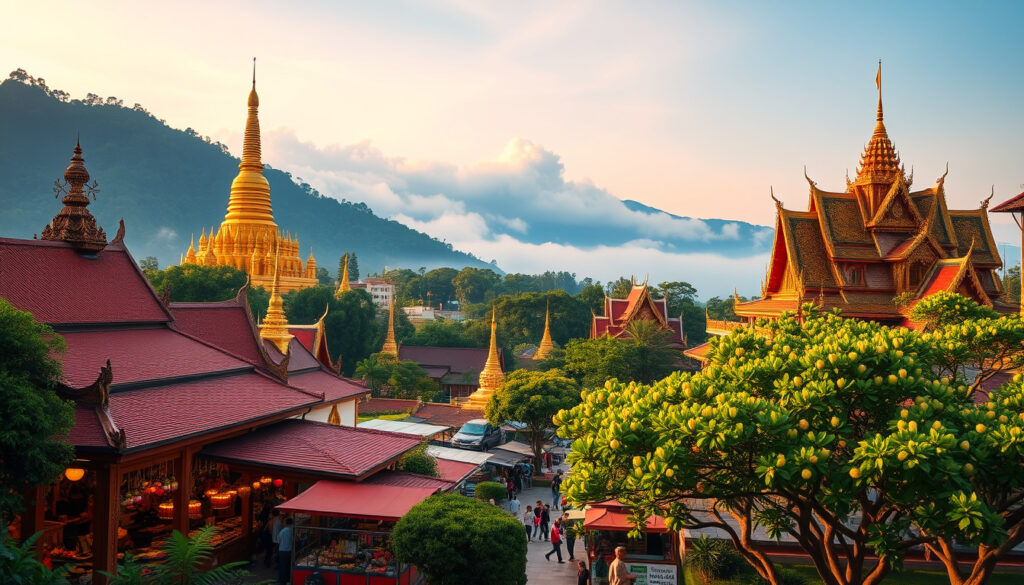
Things to Do in Chiang Mai: Temples, Markets & Sanctuaries
Few Thai cities pack as much contrast into a single stroll as Chiang Mai. One moment you’re standing before 700-year-old temple walls, the next you’re navigating a glowing maze of sizzling street-food stalls. Whether you’re here for golden chedis and jungle treks or for tracking down the best khao soi in the north, the city rewards those who linger beyond the usual weekend dash.
Temples: over 300 · National anthem: 8 AM and 6 PM daily · Recommended stay: more than 3 days · Key activities: temples, night markets, elephant sanctuaries
Quick snapshot
- Chiang Mai holds over 300 wats (Jetset Times)
- Night Bazaar runs 6 PM–11 PM daily (Machupicchu.org)
- Wat Phra Singh dates to 1345 (Jetset Times)
- Specific ethical elephant sanctuary names lack verified sources
- 2024–2026 market opening-hour updates not confirmed
- Wat Chiang Man chedi: 1297 (Travel Like Anna)
- Wat Phra Singh built: 1345 (Jetset Times)
- Legend of Doi Suthep white elephant: 1383 (Miss Filatelista)
- Wat Phra Singh chedis gilded: 2016 (Miss Filatelista)
- Plan temple visits before 9 AM to beat crowds
- Prioritize ethical wildlife experiences over showy attractions
- Allocate at least one full day for Doi Suthep temple circuit
| Fact | Detail |
|---|---|
| Temple count | over 300 |
| Key draw | temples and nature |
| Anthem schedule | 8 AM, 6 PM |
| Stay recommendation | longer than 3 days |
| Night Bazaar hours | 6 PM to 11 PM |
| Chang Phuak Gate hours | 5 PM to 11 PM |
| Wat Chedi Luang entry | 50 THB |
What should you not miss in Chiang Mai?
Chiang Mai’s must-sees fall into three zones: ancient wats, night markets, and ethical wildlife encounters. The challenge isn’t finding something to do—it’s choosing what truly belongs on your shortlist versus what belongs in every other generic itinerary.
Temples like Wat Phra Singh
Chiang Mai hosts over 300 Buddhist wats dispersed throughout the city, ranging from crumbling hilltop shrines to gleaming downtown complexes. JetSet Times notes that Wat Phra Singh was constructed in 1345 by King Phaya, the 5th king of the Mangrai dynasty, to house his father’s ashes. The Phra Buddha Singh statue arrived in 1367—a 22-year gap that tells you how deliberately relics were managed in Lanna kingdoms.
Wat Chedi Luang, built in the 15th century, remains the largest and most imposing temple in the city, though its chedi ruins date to 1441. Entrance costs 50 THB, and arriving before 9 AM means you’ll share the grounds with more monks than tourists. Novo-Monde documents that Wat Phan On offers a golden stupa in calm surroundings at no charge—a quieter alternative when the famous sites feel too crowded.
Temple etiquette matters: remove shoes before entering buildings, cover your shoulders and knees, and avoid pointing your feet at Buddha statues or people. GetYourGuide highlights that Wat Phra That Doi Suthep offers morning sunrise views and chances to observe Buddhist rituals as devotees circle the sacred relic. The journey up the mountain—legend says a white elephant carried Buddha’s shoulder bone relic there in 1383—is as much pilgrimage as sightseeing.
“Among all of Chiang Mai’s night markets, Phaploen is easily our favorite.”
— Will Fly for Food (Food Blog)
Night markets
After sunset, Chiang Mai transforms into a night-market city. The Chiang Mai Night Bazaar opens daily around 6 PM and winds down by 11 PM, primarily cash-only. Hecktic Travels documents that visitors can eat Pad Thai, khao soi, grilled skewers, and mango sticky rice while browsing silk scarves, souvenirs, and local crafts. The market sprawls along Chang Khlan Road, covering roughly two blocks.
Hotels.com lists the top markets: Chiang Mai Night Bazaar (daily from 5 PM), Tha Pae Sunday Walking Street, Wua Lai Walking Street (Saturday), Warorot Market, and Ton Lam Yai Market. Chang Phuak Gate Night Market runs nightly from 5 PM to 11 PM, focusing on local street food like pork leg rice and khao soi at 30–50 baht—noticeably cheaper than tourist-oriented stalls.
Will Fly for Food rates Chiang Mai Gate Market outside the south gate as grittier and more authentic, offering street food that locals actually eat. Machupicchu.org notes that local markets like Chang Phuak Gate and Chiang Mai Gate have lower prices (30–60 baht) compared to tourist-heavy areas.
Tourist-oriented Night Bazaar charges higher prices and emphasizes souvenir bargaining. Head to Chang Phuak Gate or Chiang Mai Gate if you want authentic local food at local prices.
Elephant sanctuaries
Ethical elephant tourism has become one of Chiang Mai’s defining draws, though specific sanctuary credentials vary. The shift away from riding-based attractions means visitors should verify that sanctuaries follow World Animal Protection guidelines: no riding, no performances, and elephants live on spacious natural terrain. Look for sanctuaries that emphasize observation over interaction and disclose how they fund elephant care without show-based revenue.
The implication: book sanctuary visits through operators that prominently display their ethical practices—not just those with the most Instagram-friendly photo opportunities. Reputable sanctuaries often have waiting lists and won’t push you to hold baby elephants for tourist photos.
Is 3 days enough for Chiang Mai?
Three days covers the highlights, but Chiang Mai rewards slower travel. Most visitors who rush through miss the difference between temples that matter historically and those that are merely photogenic.
Why stay longer
Chiang Mai’s density of experiences—especially outside the Old City walls—requires time to absorb. Doi Suthep alone warrants a half-day with the temple circuit and surrounding forest paths. Night markets operate on rotating schedules, so a weekender misses Sunday Walking Street if they arrive on a Tuesday. The city’s cooking classes, jungle treks, and ethical wildlife sanctuaries all ask for half-day to full-day commitments.
JetSet Times frames Chiang Mai as a destination best experienced over more than three days, especially if you want to balance temple visits with market wandering and nature excursions without exhausting yourself. The north’s cooler climate and mountainous terrain also invite multi-day hikes that a short visit simply can’t accommodate.
Sample 3-day itinerary
Day 1 focuses on Old City temples: Wat Phra Singh in the morning (arrive by 8 AM), Wat Chedi Luang by mid-morning, and lunch at a local market. Day 2 dedicates the morning to Doi Suthep and the Pha Lat hidden forest temple, with afternoon options for a cooking class or artisan workshop. Day 3 covers either an ethical elephant sanctuary visit or a market-focused food tour, depending on your priorities.
Extending for nature
Doi Inthanon, Thailand’s highest peak, sits about 90 minutes from the city and offers hiking trails, waterfalls, and birdwatching that reward visitors who extend their stay. The twin pagodas at the summit—King Inthanon and Queen Sirikit—draw both pilgrims and hikers. Few visitors who rushed their Chiang Mai trip ever reach it, which is precisely why it deserves a longer window.
Travelers who rush Chiang Mai in 2–3 days report feeling they “did” the city but missed the texture. Budgeting 4–5 days reveals the difference between a tourist stop and a destination worth inhabiting.
What is Chiang Mai well known for?
Chiang Mai’s identity rests on three pillars: the highest concentration of Buddhist temples in Southeast Asia, a food culture built around Lanna cuisine, and proximity to elephant sanctuaries and mountain terrain that separates it from Bangkok’s urban sprawl.
Over 300 temples
Jetset Times and Miss Filatelista both confirm that Chiang Mai contains over 300 Buddhist wats in Lanna style, ranging from modest village shrines to sprawling complexes that anchor entire neighborhoods. The city’s founding in 1296 by King Mengrai established it as a center of Lanna Buddhist practice, and centuries of patronage left the urban landscape layered with sacred architecture.
Wat Phra Singh, one of the most photographed temples, had its chedis gilded in 2016—recent enough that some visitors see bright gold where older archives show white. Miss Filatelista notes that Wat Chiang Man remains the city’s oldest temple with an elephant chedi dating to 1297, predating Chiang Mai’s own founding date by a handful of years.
Natural surroundings
Unlike Bangkok’s concrete sprawl, Chiang Mai sits at the base of mountains that define its climate and recreational offerings. Doi Suthep, Doi Pui, and the surrounding national parks draw hikers, cyclists, and nature photographers who rarely see the same trail twice. The city’s elevation (around 300 meters) produces cooler evenings than the coast, making outdoor dining and al fresco markets practical year-round.
Cultural experiences
Beyond temples, Chiang Mai hosts cooking schools that draw international students, art galleries in former teak buildings, and craft workshops that preserve Lanna techniques in woodcarving, silver-smithing, and silk weaving. The Tourism Authority of Thailand positions the city as a cultural hub distinct from beach-focused resorts, emphasizing the depth of experiences available within a compact urban footprint.
Chiang Mai’s fame rests on temple density, Lanna food culture, and ethical wildlife access. Each pillar rewards travelers who dig past the Instagram highlights into the city’s daily rhythms and craft traditions.
What to avoid in Chiang Mai?
Chiang Mai isn’t without its sharp edges. Knowing what to sidestep separates visitors who enjoy the city from those who leave frustrated—or worse, those who inadvertently cause offense.
Unsafe areas
Chiang Mai’s tourist areas around the Old City and Night Bazaar are generally safe, but certain areas warrant caution after dark. Wandering quiet sois (alleyways) alone late at night invites petty theft. The hills around Doi Suthep’s lower slopes include restricted monastic areas where visitors—particularly men in certain quarters—are not welcome without invitation. Respect posted signs and temple boundaries.
Unethical elephant rides
The biggest ethical pitfall is elephant riding or shows that claim to be sanctuaries while operating ride-based attractions. World Animal Protection and multiple animal welfare organizations have documented that chaining, riding, and performance-based elephant tourism causes chronic physical and psychological harm. A sanctuary that allows riding is not an ethical sanctuary—full stop. Look for operations that explicitly state no rides, no hooks, and large natural enclosures.
Visiting a showy elephant camp isn’t just an ethical misstep—it actively funds animal cruelty. Verify credentials before booking, even if a sanctuary has hundreds of positive reviews. High review counts on unethical platforms aren’t the same as ethical accreditation.
Cultural disrespect
Thailand’s national anthem plays at 8 AM and 6 PM daily across public spaces, and standing still during the anthem is expected of all visitors. Temple dress codes—covered shoulders and knees—are non-negotiable at major sites; shorts above the knee get you turned away at Wat Phra Singh and Doi Suthep. Pointing your feet at Buddha statues or people is considered deeply disrespectful, and even casual photographs require asking permission in meditation halls.
Thailand’s lese-majesty laws are enforced strictly; never joke about or photograph the royal family irreverently. These aren’t tourist traps—they’re cultural boundaries with real consequences. Travelers who treat them as optional often find themselves in situations that no amount of travel insurance resolves.
Unique things to do in Chiang Mai?
Chiang Mai’s best experiences resist the standard checklist. They require trading a few tourist hours for deeper immersion in food, craft, or natural environments that most visitors overlook.
Night activities
Beyond the Night Bazaar’s souvenir maze, Chiang Mai after dark offers stargazing at Doi Inthanon, late-night art gallery openings in the Nimmanhaemin district, and acoustic music bars that attract expats and backpackers who’ve been in Southeast Asia long enough to know the difference. Phaploen Market (east of the Old City) draws food-focused visitors who prefer eating where locals eat, not where tour buses unload.
Old City exploration
The Old City itself rewards slow wandering—small temples tucked behind unlabeled sois, century-old teak buildings converted into cafes, and monks cycling to morning alms rounds that predate the tourist map by hours. Novo-Monde points out that Wat Pha Lat remains a hidden forest temple on Doi Suthep that many visitors skip in favor of the famous mountaintop site. Those who find it encounter statues and prayer areas that feel genuinely discovered rather than curated.
Family and free options
Families with children will find Chiang Mai’s ethical sanctuaries appeal to kids who want animal encounters without the ride-based guilt. The Night Bazaar’s free entry lets families explore without committing to purchases. The Chiang Mai Zoo and its adjacent aquarium offer half-day activities for rainier days, while the city’s numerous parks—including Huay Kaew and Nong Buak Haad—provide free green space within walking distance of the Old City.
“Chiang Mai’s night markets transform the city into a vibrant labyrinth of colors, aromas, and sounds after sunset.”
— Machupicchu.org (Travel Guide)
The pattern shows that visitors who allocate time for hidden temples and local markets discover a fundamentally different city than those who stick to the verified highlights—Chiang Mai’s depth rewards curiosity over itinerary efficiency.
Related reading: Ha Giang Loop Tour · Seven Wonders of the World
thepassportmemorandum.com, maverickbird.com, palmvilla-chiangmai.com
Many visitors arrive in Chiang Mai via the scenic overnight train from Bangkok, easing into explorations of its ancient temples and bustling night markets.
Frequently asked questions
What’s the best time to visit Chiang Mai?
November through February offers the coolest temperatures (15–25°C) and lowest rainfall, making it peak season. March through May brings intense heat (35°C+). The monsoon season (June–October) sees afternoon showers but fewer crowds and lower prices. Each season trades comfort for crowd levels and cost.
How to get around Chiang Mai?
Songthaews (shared pickup trucks) on fixed routes offer the cheapest transport at 20–40 baht per ride. Grab (Southeast Asia’s Uber equivalent) works reliably and transparently. Scooter rentals (150–300 baht/day) are common but require confidence on chaotic roads. Walking suits the compact Old City, but destinations beyond it need transport.
Are elephant sanctuaries ethical in Chiang Mai?
Ethical sanctuaries exist, but they require verification. Look for operations that explicitly prohibit riding, chaining, and performances. Ask whether elephants have large natural enclosures and whether visitors observe rather than interact physically. Reputable sanctuaries have waiting lists and don’t advertise on aggressive discount platforms.
What to wear in Chiang Mai temples?
Cover shoulders and knees at all temple sites. Loose linen pants and breathable shirts work in the heat while meeting dress codes. Remove shoes before entering buildings. Hats and sunglasses are acceptable outdoors but should come off inside prayer halls. A light scarf or sarong that doubles as a cover-up handles sudden temple visits without a full wardrobe change.
Is Chiang Mai good for families?
Yes, with caveats. Ethical elephant sanctuaries, cooking classes, and night markets (free entry) work well for children. Heat and temple fatigue set in faster with kids than adults, so plan early mornings and afternoon breaks. The Old City’s compactness means families can return to accommodations without full-day transport commitments.
How much does a Chiang Mai trip cost?
Budget travelers manage on 800–1,200 THB/day ($22–33 USD) covering dormitory accommodation, street food, and local transport. Mid-range visitors spend 2,000–3,500 THB/day ($55–97 USD) on private rooms, restaurant meals, and activities. Temple entry fees are modest (20–50 THB), but ethical elephant sanctuary visits run 2,500–4,000 THB per person.
What’s the weather like in Chiang Mai?
Hot and humid dominates March through May (35°C+ daily). Cooler season (November–February) brings 15–28°C days, occasionally dropping to 10°C at night. Monsoon season (June–October) features afternoon thunderstorms, often heavy but brief, with 80–90% humidity. The dry, cool season suits temple visits and hiking; the wet season suits indoor activities and waterfall viewing.
More related posts
 Buriram United vs Johor Darul Ta’zim: Comparison & Records
 Sept School Holidays 2026: Irish Term Dates Guide
 Malaysia Passport Renewal Online: Step-by-Step Guide
 Sentosa Things to Do: Attractions, Free Activities & Guide
 Translate English to Myanmar Unicode: Top Tools
 Xiaomi Service Centre Singapore: Repairs & Options
 Letscool Aircon and Services Reviews: Complaints & Ratings
 What Can a Climate Voucher Be Used For? Buy List