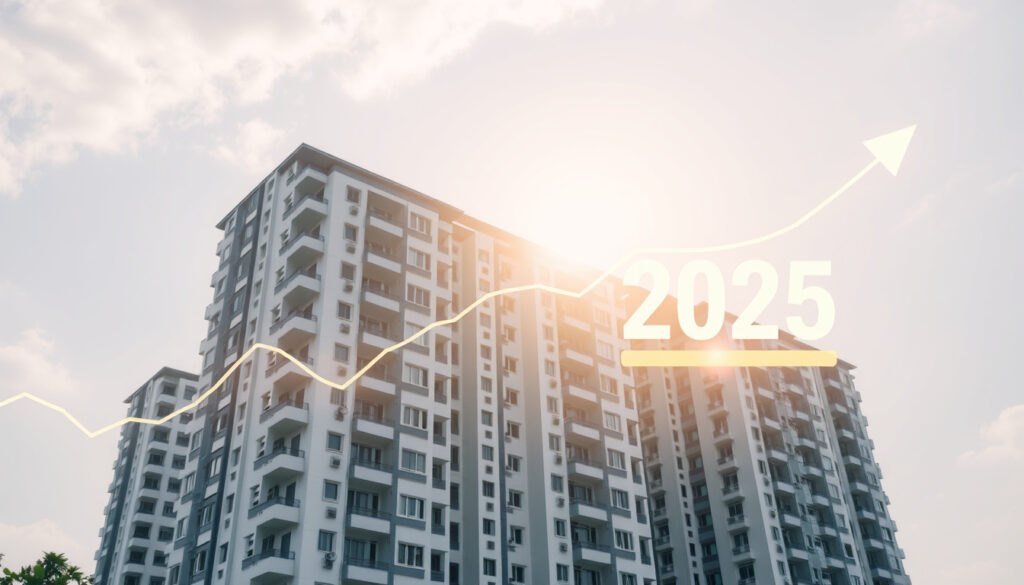
BTO Income Ceiling 2025: Current Limits & What’s Next
Few numbers in Singapore matter more to a home-buying plan than the BTO income ceiling — it decides whether you qualify for a subsidised flat or have to look elsewhere. Families, singles, and extended households each face different limits, and the 2025 picture is both settled and quietly shifting. The current $14,000 ceiling for families hasn’t changed since 2019, but signals from Parliament and ministers suggest a review is being weighed against economic conditions.
Current ceiling (families): $14,000/month · Singles ceiling: $7,000/month · Extended families: $21,000/month · Last revised: 2019
Quick snapshot
- Family BTO ceiling is $14,000/month, unchanged since 2019 (HDB official eligibility page)
- Singles ceiling for 2-room Flexi flats in non-mature estates is $7,000/month (PropertyGuru 2025 guide)
- Extended multi-generation families have a $21,000/month ceiling (HDB couples and families page)
- Exact date or conditions for a future ceiling raise remain unannounced (Straits Times report)
- Government launched 9,144 BTO flats in October 2025 and 9,012 units in February 2026 (Channel NewsAsia, Mar 2025)
- Minister Desmond Lee said a ceiling raise will happen “when the time is right” (Channel NewsAsia, Mar 2025)
- Pritam Singh proposed a $16,000 ceiling for executive condos in March 2026 (Parliament speech record)
- Official announcement of any ceiling revision likely tied to supply ramp-up of 55,000 units through 2027 (Straits Times coverage)
- Singles eligibility age may also be lowered when flat supply is sufficient (Straits Times coverage)
- Watch for Budget 2026 or National Day Rally 2026 as possible announcement windows (Straits Times coverage)
Five ceilings, one pattern: the limits tighten as household size shrinks, and the widest gap sits between families and singles — a $7,000 difference that shapes who can buy what.
| Household type | Monthly income ceiling | Last revised | Flat types available |
|---|---|---|---|
| Families (2011 revision) | $10,000 | 2011 | All BTO flat types |
| Families (2015 revision) | $12,000 | 2015 | All BTO flat types |
| Families (current) | $14,000 | 2019 | All BTO flat types |
| Singles (age 35+) | $7,000 | 2019 | 2-room Flexi in non-mature estates |
| Extended / multi-generation families | $21,000 | 2019 | Applicable under joint applications |
| Executive condominiums (EC) | $16,000 (proposed, not confirmed) | — | Under parliamentary discussion |
What is the BTO salary cap for 2025?
Current income ceiling for families and married couples
- The standard BTO income ceiling for families and married couples remains at $14,000 per month, unchanged since the last revision in 2019 (HDB official eligibility page).
- This applies to all BTO flat types when applying as a couple or a family nucleus. The ceiling is calculated on the average monthly household income over the past 12 months, including bonuses and commissions.
- A Parliamentary reply in September 2025 from Ms Sun Xueling, then Senior Minister of State for Home Affairs and Social and Family Development, confirmed the ceiling “can be raised when the right conditions are in place” (Straits Times political coverage).
Income ceiling for singles
- Singles aged 35 and above can apply for a 2-room Flexi BTO flat in non-mature estates under the Single Singapore Citizen Scheme, subject to a monthly income ceiling of $7,000 (PropertyGuru eligibility breakdown).
- This ceiling has not moved since 2019 either. Note that singles cannot apply for larger flat types under the BTO scheme — only resale or 2-room Flexi.
- The government has indicated the singles eligibility age could be lowered from 35 when flat supply expands further (Straits Times report on parliamentary exchange).
Income ceiling for extended families
- Extended or multi-generation families — defined as a married couple living with parents or grandparents — benefit from a higher ceiling of $21,000 per month (HDB multi-generation family guidance).
- This scheme requires a joint application with at least two singles or one married couple plus at least one parent. The rationale is that households supporting dependants need more income headroom to qualify for a flat large enough for everyone.
- PropertyGuru’s 2025 guide confirms the same $21,000 figure for multi-generation applicants (PropertyGuru — Singapore property advisory).
What this means: A dual-income couple earning $12,000 combined is still comfortably under the $14,000 line, but a single earning $8,000 in a professional role is priced out of a new 2-room BTO — and must turn to the resale market, where different income rules apply.
A family earning $13,500 per month qualifies for a 4-room BTO in a mature estate, while a single earning $7,500 is locked out of a 2-room BTO entirely — even if both have identical savings. The ceiling doesn’t just cap income; it steers singles toward resale flats, which come with their own grant structure.
Is there an income ceiling for BTO?
Why income ceilings exist
- Yes — an income ceiling applies to every BTO application. The stated policy goal, as noted in parliamentary records, is to ensure the majority of Singaporean households remain eligible for subsidised housing while targeting subsidies at lower- and middle-income families (Straits Times summary of government position).
- The ceiling functions as a means-testing mechanism: if your household income is below the threshold, the government assumes you need more subsidy to afford a flat. Above it, you are expected to turn to the resale market or private property.
Which flat types are affected
- Income ceilings apply to all BTO flat types — 2-room Flexi, 3-room, 4-room, 5-room, and 3Gen flats — but the ceiling amount is the same for all family applicants ($14,000). The only variation is by household composition, not by flat size.
- Executive condominiums (ECs) are a hybrid category: they have a separate ceiling of $16,000 under current rules, though a parliamentary proposal from Pritam Singh in March 2026 suggested raising the EC ceiling further (Singapore Parliament — Leader of the Opposition speech record).
Exceptions and appeals
- If your household income exceeds the ceiling by a small margin, you cannot appeal for a BTO flat — the ceiling is a hard cut-off for eligibility under the subsidised scheme.
- However, you can still purchase an HDB resale flat with a CPF housing grant, provided you meet the income ceiling for that grant (which is different from the BTO ceiling). The resale grant income ceiling for families is also $14,000 as of 2025, but there are separate family and proximity grants available.
- Applicants who own private property — locally or overseas — are ineligible for BTO unless they have sold that property at least 30 months before applying (PropertyGuru HDB eligibility checklist).
What is the income ceiling for BTO 2026?
Official statements on potential changes
- As of early 2025, neither the 2026 nor any future ceiling has been officially announced. In March 2025, Minister Desmond Lee (National Development) told Parliament the government will raise HDB income ceilings “when the time is right,” declining to offer a specific date or figure (Channel NewsAsia — Ministerial response coverage).
- The government’s position ties any revision to broader economic conditions, wage growth, and especially the supply pipeline — meaning a raise is unlikely before a significant increase in completed flats.
Political proposals — the $16,000 discussion for executive condos
- On 4 March 2026, Pritam Singh, Leader of the Opposition, proposed in Parliament that the income ceiling for executive condos be raised to $16,000 to keep pace with rising household incomes (Singapore Parliament — Official Report of proceedings).
- This is a parliamentary proposal, not a policy change — the government has not accepted or rejected it publicly. It does signal, however, that the $16,000 figure is politically viable on the table for ECs, and possibly for standard BTO in future.
Historical revision pattern
- The BTO income ceiling for families has been revised only three times in the past two decades: from $8,000 to $10,000 (2011), then to $12,000 (2015), and finally to $14,000 (2019) (HDB historical policy records).
- The intervals have lengthened — four years between the last two changes — and the current stretch of six years (2019–2025) is the longest since 2011. This suggests either that the government believes the $14,000 ceiling still covers a large enough majority, or that it is waiting for supply conditions to align before raising it.
- The Straits Times noted in September 2025 that the government is “reviewing the ceiling,” and that the pace of flat completions will be a key input to any decision (Straits Times — policy review coverage).
The pattern: Each revision has lifted the ceiling by roughly $2,000 per increment, spaced 4–6 years apart. If that rhythm holds, a raise to $16,000 for standard BTO flats could come between 2026 and 2027 — but only if supply keeps pace with the expanded eligibility pool.
The key trigger isn’t a calendar date — it’s the supply pipeline. With 55,000 flats planned from 2025 to 2027, the moment HDB believes it has enough units to absorb a wave of newly eligible applicants, the ceiling will likely move. Budget 2026 and the National Day Rally in August are the two traditional platforms for such announcements.
Timeline: BTO income ceiling milestones
- — Last revision of the BTO income ceiling; set at $14,000 for families and $7,000 for singles.
- — Minister Desmond Lee informs Parliament the government will raise ceilings “when the time is right” (Channel NewsAsia).
- — Ms Sun Xueling notes in Parliament that the ceiling can be raised when conditions allow, and that the singles eligibility age may also be lowered (Straits Times).
- — HDB launches 9,144 flats across 10 BTO projects, the largest single sales exercise of the year.
- — HDB launches 9,012 flats under BTO and Sale of Balance Flats (SBF) exercises.
- — Pritam Singh proposes a $16,000 EC income ceiling in Parliament (Parliament of Singapore).
What is the BTO supply in 2025?
October 2025 BTO sales exercise — 9,144 flats
- HDB launched 9,144 flats across 10 projects in the October 2025 BTO sales exercise, spanning mature and non-mature estates including locations in Jurong East, Tampines, and Woodlands (HDB sales launch information).
- This was the largest single BTO launch of the year, part of the government’s ramp-up toward the 55,000-unit target for 2025–2027.
February 2026 BTO and SBF — 9,012 flats
- In February 2026, HDB launched 9,012 flats under a combined BTO and Sale of Balance Flats (SBF) exercise (HDB quarterly launch schedule).
- The mix included 2-room Flexi, 3-room, 4-room, and 5-room flats across both mature and non-mature estates, with shorter waiting times for some SBF units.
Impact of supply on eligibility
- Supply levels do not directly change income ceilings — but they are the enabling condition for a ceiling raise. As Minister Desmond Lee framed it, more flats mean the system can absorb more eligible applicants without causing excessive demand pressure.
- The 55,000-unit pipeline through 2027, if delivered on schedule, provides the capacity to raise ceilings — particularly for singles — without dramatically worsening the application-to-flat ratio.
Why this matters: A higher income ceiling without matching supply would simply shift the bottleneck from eligibility to ballot luck. The government is sequencing the two: supply first, ceiling raise second.
Can a 70 year old buy an HDB flat?
Age limits for BTO vs resale
- Yes — a 70-year-old can buy an HDB flat, but the rules differ between BTO and resale. For BTO, the minimum age is 21, and there is no upper age limit provided the applicant meets all other eligibility criteria including citizenship, family nucleus, and income ceiling (HDB general eligibility guidelines).
- For a single person aged 70, the relevant path is the Single Singapore Citizen Scheme, which requires the applicant to be at least 35 — so a 70-year-old single qualifies on age. The income ceiling of $7,000 applies.
- For the resale market, there is no age cap at all. Seniors can buy any HDB resale flat, and additional schemes such as the Silver Housing Bonus and Lease Buyback Scheme are available for those aged 65 and older (HDB senior schemes portal).
Special schemes for seniors
- The Silver Housing Bonus provides seniors who downsize from a larger flat to a 3-room or smaller resale flat with a cash bonus of up to $30,000, subject to income and asset tests.
- The Lease Buyback Scheme (LBS) allows seniors aged 65 and above to sell back part of their flat’s lease to HDB while continuing to live in the property, unlocking a stream of retirement income.
- Both schemes are designed to help seniors age in place without needing to move out of their community.
Income ceiling considerations for older buyers
- For a 70-year-old single applying for a 2-room BTO, the $7,000 income ceiling applies. Many seniors on fixed retirement incomes fall well below this threshold, so eligibility is usually not a problem.
- For a 70-year-old married to a younger spouse, the family ceiling of $14,000 applies as long as the couple applies jointly. If the senior’s income alone exceeds $14,000 — rare for retirees — the family may still qualify through the spouse if their combined income is within the limit.
- Private property ownership remains a critical disqualifier: a 70-year-old who owns a private home — locally or overseas — cannot buy a BTO flat, but can buy a resale HDB after disposing of the private property (PropertyGuru — private property rule).
Clarity check: What’s confirmed and what’s still open
Confirmed facts
- 2025 BTO income ceiling for families is $14,000/month — unchanged since 2019 (HDB)
- Singles ceiling is $7,000/month for 2-room Flexi flats (PropertyGuru)
- Extended family ceiling is $21,000/month (HDB)
- Private property owners cannot buy BTO unless sold at least 30 months prior (PropertyGuru)
- Government has publicly stated a raise is under review (Channel NewsAsia)
What’s unclear
- Exact date or conditions for a ceiling raise — no timeline has been given
- Whether a raise would apply to all BTO types or only ECs
- Whether the singles eligibility age will be lowered from 35
- Impact of a higher ceiling on resale flat demand and prices
- Whether the proposed $16,000 EC ceiling will be adopted
Perspectives from the ground
“The BTO income ceiling can be raised when the right conditions are in place, and we are monitoring economic indicators closely to ensure that any change supports young families without overheating demand.”
— Ms Sun Xueling, Senior Minister of State for Home Affairs and Social and Family Development, in a parliamentary reply quoted by The Straits Times (26 Sept 2025)
“We will raise HDB income ceilings when the time is right. We are building more flats now so that when we do raise the ceiling, there will be enough supply to meet the additional demand.”
— Minister Desmond Lee, National Development, speaking to Channel NewsAsia (5 Mar 2025)
“With household incomes rising, the executive condo income ceiling of $16,000 is a sensible adjustment to ensure middle-income families are not priced out of the hybrid housing segment.”
— Pritam Singh, Leader of the Opposition, in Parliamentary debate (4 Mar 2026)
All three speakers agree on one thing: the ceiling will move. The disagreement is about timing and scope — whether the change will be broad or narrow, and whether supply will be ready to absorb the newly eligible without pushing prices higher for everyone else.
The editorial verdict: The $14,000 ceiling has held for six years while median household incomes in Singapore have risen roughly 12–15% over the same period (SingStat household income data). Young families earning $13,000–$14,000 combined: you are still in the game, but only just — and any income bump from a promotion or a second job could push you over the line. Singles earning $7,000+: your only BTO option is the 2-room Flexi in a non-mature estate, and even that may be out of reach as wage growth inches upward without a ceiling revision. The policy is effectively squeezing middle-income households toward the resale market — which has its own grants, but also higher prices.
dollarbackmortgage.com, propertynet.sg, instagram.com, instagram.com
For those considering an Executive Condominium, the EC income ceiling 2025 sets a higher threshold of SGD 16,000, which may influence future BTO adjustments.
Frequently asked questions
What is the difference between BTO and EC income ceiling?
The standard BTO ceiling for families is $14,000, while the EC ceiling is currently $16,000. A parliamentary proposal in March 2026 suggested raising the EC ceiling further to keep pace with rising incomes (Parliament of Singapore).
How is the BTO income ceiling calculated?
The ceiling is based on the average monthly household income over the 12 months preceding the application, including salaries, bonuses, commissions, and recurring allowances. It is a gross figure before CPF contributions (HDB eligibility page).
Does the income ceiling apply to all HDB flat types?
Yes — it applies to all BTO flat types (2-room Flexi, 3-room, 4-room, 5-room, and 3Gen). The ceiling amount depends on the household composition, not the flat size. Resale flats have different eligibility rules and grant income ceilings (HDB general guidance).
Can I appeal if my income exceeds the ceiling?
No — the income ceiling is a hard cut-off for BTO eligibility. There is no appeals process for exceeding it. Affected households can instead purchase an HDB resale flat and apply for CPF housing grants, which have their own income ceilings (PropertyGuru eligibility guide).
What is the income ceiling for resale HDB with CPF grants?
The family income ceiling for the CPF Housing Grant for resale flats is also $14,000 as of 2025. Additional grants such as the Enhanced CPF Housing Grant (up to $80,000) and the Proximity Housing Grant (up to $30,000) have their own income tiers (HDB grants portal).
Does the income ceiling include bonuses and commissions?
Yes — the income assessment uses the gross monthly average over 12 months, which includes base salary, bonuses, commissions, overtime pay, and recurring allowances. Variable components mean your eligibility can fluctuate year to year (HDB income assessment criteria).
What happens if my income increases after I apply for BTO?
Once you have been selected in a BTO balloting exercise, income is assessed at the point of application. A subsequent salary increase does not disqualify you, provided your income at the time of application was within the ceiling. However, the ceiling must still be met at key milestones such as the flat booking appointment if HDB re-verifies your income.
More related posts
 Slot Gacor Wow388: Verified Info & User Questions (2025)
 Microplastics in Human Blood: Types, Amounts, and Risks
 Best Rotkohl with Apples Near Me: Recipe & Local Tips
 University of British Columbia: Rankings, Ivy League Comparison
 Spiderman Into The Spider Verse – Review and Analysis
 IRAS Income Tax Calculator 2026: How to Use & Calculate Tax in Singapore
 Samsung S25 Ultra Price in Singapore: Official & Retailer Costs
 Sands China Share Price: Quote, Targets & Analysis