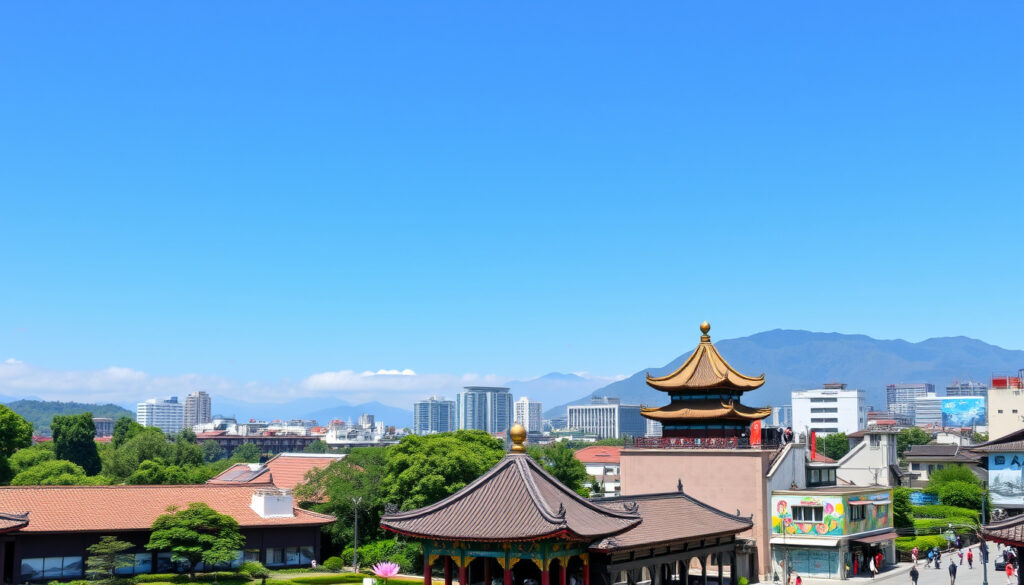
Things to Do in Taichung: Top Guide to Attractions
Taichung catches a lot of visitors off guard. Most travelers zoom through Taiwan’s third-largest city on their way to Taipei or Sun Moon Lake, not realizing this compact hub packs enough culture, nature, and world-first credentials to fill a long weekend without breaking a sweat. The city gave the world bubble tea, and it now draws crowds with painted villages, wetlands stretching to the horizon, and creative parks that turn abandoned government dormitories into Instagram-ready escapes. Whether you have one day or two, here’s how to actually spend it.
Metro Population: 2.8 million · Known For: Night Markets · Bubble Tea Origin: Taichung · Major Temple: Wanchungong Temple
Quick snapshot
- Taichung Park is the city’s oldest green space, with a pavilion commemorating the 1908 Crossway Railway (Ms Travelsolo travel guide)
- National Taiwan Museum of Fine Arts and National Taiwan Museum of Comics both offer free entry (Ms Travelsolo travel guide)
- Gaomei Wetlands spans 1,500 acres — prime cycling, birdwatching, and sunset territory (Ms Travelsolo travel guide)
- Exact crowd levels at Zhongshe Flower Market on weekend Sundays
- Current 2026 operating schedules for some creative parks after 2025 openings
- Whether donation amounts at Rainbow Village have changed recently
- 1908 — Crossway Railway pavilion built in Taichung Park
- January 2025 — CMP Inspiration museum opened
- Post-1999 — 921 Earthquake Museum established
- Taichung continues developing creative park culture as a tourism anchor
- Cycle infrastructure along former rail corridors expanding north of city
A snapshot of Taichung’s key data helps frame the city’s scale and standout credentials.
| Label | Value |
|---|---|
| Location | Central Taiwan |
| Metro Population | 2.8 million |
| Key Fame | Bubble Tea Invention |
| Main Park | Taichung Park |
| Free Museums | National Taiwan Museum of Fine Arts, National Taiwan Museum of Comics |
| Top Free Attraction | Gaomei Wetlands (1,500 acres) |
| Historic Greenway | Calligraphy Greenway (3.6 km) |
Things to Do in Taichung Day Trip
Taichung rewards the day-tripper who arrives with a loose plan. The city spreads around a handful of anchors — parks, markets, and museums — connected by a greenway corridor that makes walking between spots surprisingly pleasant. Most itineraries cluster around the center, where Taichung Park, the Railway Cultural Park, and the creative villages sit within a few kilometers of each other.
Explore Taichung Park
Taichung Park holds the title of the city’s oldest green space. Its artificial lake reflects a double pavilion that commemorates the 1908 Crossway Railway — a visual anchor that visitors consistently rate among the most striking scenes in the city, especially after dark. The park also contains remnants of a Shinto Shrine and a pond modeled on Sun Moon Lake, giving you Taiwan’s geography in miniature.
The 3.6-kilometer Calligraphy Greenway links Taichung Park to museums, malls, and Shenji New Village without requiring a bus or taxi. The path doubles as a cultural strip: art installations appear between blocks of shops, and the umbrella-lined alley near the Taichung Cultural and Creative Industries Park offers one of the most-photographed free sights in the city.
Taichung Park and the Calligraphy Greenway together cover roughly 90 minutes of walking at a relaxed pace — enough to justify skipping the metro fare and seeing more of the city fabric on foot.
Visit Old Train Station and Railway Cultural Park
The old Taichung Station now operates as the Taichung Station Railway Cultural Park, open 11am–9pm. The former station building has been converted into a creative hub where weekend vendors sell handmade goods and crafts. On weekdays, the space leans quieter — better for photographing the architecture than for browsing stalls.
A 15-minute walk east brings you to the National Taiwan Museum of Comics, housed in Japanese-era styled buildings with free admission. The collection rotates regularly, and the surrounding neighborhood retains a colonial-era street grid worth wandering. If you prefer modern art instead, the National Taiwan Museum of Fine Arts sits across the greenway and stays open 9am–6pm (closed Mondays) with no entry fee.
Birthplace of Bubble Tea
Taichung claims the invention of bubble tea in the 1980s, and the city still wears this credential proudly. Chun Tang Shui Mu — one of the oldest bubble tea shops — operates near the city center and draws pilgrims from across Taiwan and beyond. The menu leans traditional compared to the sugar-loaded chains, but the original osmanthus and taro varieties still define what made the drink famous.
Most day-trippers slot the bubble tea stop between museum visits or as a mid-afternoon break. The shop doesn’t have (lines) during weekday mornings, making early arrivals the smart play.
Free Things to Do in Taichung
Taichung punches above its weight on free attractions, particularly the outdoor and arts venues that cost nothing to enter. According to TripAdvisor’s top free attractions list, Gaomei Wetlands, Rainbow Village, National Taichung Theater, and NTMoFA consistently rank among the highest-rated free spots in the city.
Stroll City Streets and Greenways
The Calligraphy Greenway is the backbone of free Taichung. The 3.6-kilometer path connects Taichung Park in the west to the National Taichung Theater in the east, threading past pop-up markets, public art, and shade trees. Walking the full length takes about 45 minutes at a steady pace, but most visitors stop midway at Shenji New Village, where converted auditing office dormitories now hold boutique shops, specialty cafes, and the kind of Instagram-ready corners that travel blogs love.
Shenji New Village opens at 11am and stays busy through 7pm on weekends. Weekday visits offer a quieter experience — fewer crowds, easier photo access, more room at the outdoor tables.
Gaomei Wetlands
Gaomei Wetlands spans 1,500 acres north of the city center, and it rewards the effort to reach it. The wetland area sits near the coast, making it ideal for cycling along the boardwalks, watching migratory birds, and catching sunsets that photographers rank among Taiwan’s best. Rent a bike in town and ride the flat coastal roads — the route is safe enough for beginners but long enough to tire out intermediate cyclists.
The wetlands are free to enter, though bike rental runs around NT$200–300 per day from shops near the entrance. Bring water and sun protection; shade is limited.
Rainbow Village
Rainbow Village exists because one man decided not to lose his home. Huang Yong-Fu, a military veteran, painted the walls of his military dependents’ village in psychedelic colors and patterns to stop the bulldozers from razing the block. The result draws thousands of visitors annually — all of them there because one resident refused to give up.
Admission is free, supported by a small souvenir shop where proceeds help maintain the village. Most visitors spend 20–30 minutes walking the narrow painted alleys. The best time to visit is early morning or late afternoon when the light catches the colors at their most vivid.
National Taichung Theater
The National Taichung Theater’s architecture alone justifies a visit — the building looks like a folded white cave from the outside, with interior spaces that flow without conventional walls. Performances run throughout the year, but the Sky Garden rooftop is accessible without a ticket. Head to the top floor for a free panoramic view of the city that most tourists miss.
Public Temples
Wanchungong Temple draws both worshippers and architecture enthusiasts. The temple complex includes night lighting that transforms the space after dark, and the surrounding market stalls serve local snacks at prices that haven’t inflated much despite growing visitor numbers. Wenxin Forest Park offers a quieter green alternative near the east-side museums — less historic than Taichung Park, more convenient for museum-hoppers based in that district.
Taichung’s free attractions aren’t afterthoughts or budget substitutes — several (NTMoFA, the National Taichung Theater) are nationally significant cultural institutions. Skipping them to chase paid theme parks means missing the city’s actual personality.
Unique Things to Do in Taichung
Taichung stands apart from other Taiwanese cities in one specific way: it has what travel bloggers call “creative parks” — repurposed government and industrial facilities turned into craft markets, art installations, and cafe districts. According to the Eternal Arrival travel blog, “Taiwan is the only place in the world I’ve been where they have creative parks, and they are these bustling hubs of creativity and uniqueness.”
Zhongshe Flower Market
Zhongshe Flower Market sits about 40 minutes outside the city center and draws visitors with seasonal flower fields, greenhouse installations, and a barbecue section where you cook your own produce. The market is particularly popular on weekends, which means crowds — a tradeoff between the lively atmosphere and the photo opportunities that disappear when too many people crowd the frames.
Transportation requires either a bus transfer or a taxi ride; the bus costs roughly NT$30 but involves a wait, while a taxi runs NT$250–350 each way. Many visitors combine Zhongshe with a morning stop at Gaomei Wetlands, since both lie in the same northern direction from Taichung.
Hot Springs Nearby
The closest hot spring districts to Taichung are in the mountains to the east — roughly 90 minutes by bus. Visitors choosing between Tagang and Guguang typically report that Tagang offers better value for an overnight stay, while Guguang attracts those prioritizing the quality of the spring water itself. Neither is walkable from Taichung’s city center; plan for a dedicated day trip if soaking is on your agenda.
Urban Gardens and Creative Parks
Beyond Shenji New Village, Taichung hosts several creative parks worth knowing about. Fantasy Story – Green Ray occupies a former water corporation dormitory and now holds restaurants, cafes, a brewery, and retro gift shops open 10am–9pm. CMP Block Museum of Arts features rotating interactive exhibits focused on imagination — the kind of place that keeps kids engaged for an hour while parents take turns reading the exhibit notes.
CMP Inspiration, which opened in January 2025, centers on creativity and imagination with an admission fee of NT$150. The museum’s recent opening means it’s currently generating the most fresh content from travel photographers — expect a surge of social media posts through 2025–2026.
Luce Memorial Chapel
On the Tunghai University campus in the city’s east, the Luce Memorial Chapel ranks as one of Taiwan’s most photographed pieces of modern architecture. The irregular hexagonal base and curvy tent-like concrete structure were designed by I.M. Pei, and the chapel sits at the edge of the campus where the university grounds transition to hills. Most visitors pair this stop with nearby Luce Park for a combined 45-minute visit that doesn’t require a car.
What to Do in Taichung at Night
Taichung’s night scene concentrates in two zones: the night markets along the western district and the temple night views to the east. Most visitors prioritize the markets for food, then drift toward Wanchungong Temple after dinner when the lighting makes the architecture worth photographing.
Night Markets
Taichung’s night markets operate on a rotating schedule — Fengjia Night Market takes the top spot for most visitors, but the smaller Ningxia and Wuqiang night markets draw more locals and offer better prices. Each market typically opens around 5pm and peaks between 7pm and 9pm before gradually clearing out by 11pm.
Street food staples appear across all markets: oyster omelets, stinky tofu, bubble tea, grilled skewers, and sweet taro balls. Prices at Fengjia run slightly higher than the neighborhood markets due to tourist volume. Most first-time visitors spend 90 minutes to two hours at their chosen market — enough to eat, walk the stalls twice, and snap the necessary photos.
Temple Night Views
Wanchungong Temple is the most accessible major temple for evening visits from the city center. The lighting installation that debuted in recent years has made night photography a legitimate reason to add the temple to your itinerary rather than treating it as a daytime stop. The temple grounds stay open later than the surrounding markets, making it a natural last stop after dinner.
For visitors based in the east district near the National Taichung Theater, the National Museum of Natural Science occasionally runs evening events — worth checking the calendar if your visit falls on a Friday or Saturday. The museum’s dinosaur exhibit hall closes during standard hours, but the outdoor areas remain accessible.
Street Food Scenes
Taichung’s street food culture extends beyond the night markets. The Taichung Second Market, a daytime market from the Japanese colonial era, sits near Liuchuan Riverside Walk and operates morning through early afternoon. Arrive before noon to catch the freshest produce and cooked-to-order stalls; the market clears out by 2pm most days.
Liuchuan Riverside Walk itself runs along the canal and gets decorated during the Christmas season with lights and installations. The rest of the year it’s a quiet walking path useful as a shortcut between the Second Market and the creative villages on the east side of the greenway.
Taichung’s night markets close earlier than Taipei’s — most are winding down by 11pm even on weekends. If you’re used to late-night Taipei eating, adjust expectations and plan dinner before 9pm.
What to Eat in Taichung
Food is never just sustenance in Taichung — it’s the activity around which half the city’s culture revolves. From bubble tea’s birthplace to night market skewers to the unexpected brewery tucked inside a converted cultural park, eating in Taichung means engaging with the city’s creative side as much as its appetite.
Bubble Tea Origins
No food-focused Taichung itinerary skips bubble tea entirely, but smart travelers go beyond the tourist chains. Chun Tang Shui Mu serves the traditional varieties — osmanthus, taro, and the original pearl milk tea — in a setting that hasn’t changed much since the 1980s. The shop opens early and closes mid-afternoon, making it a morning stop rather than an evening one.
For travelers with limited time, bubble tea stops at Fengjia Night Market work in a pinch — the quality runs lower but the convenience compensates. The key difference: traditional shops use smaller pearls (tapioca balls) that bounce differently than the oversized versions at chain franchises.
Local Street Eats
Taichung’s street food scene clusters around the Taichung Second Market for daytime eats and Fengjia Night Market for evening variety. The Second Market’s vendor stalls focus on savory breakfast items — congee with century eggs, turnover pastries, fresh soy milk — that most visitors miss because they arrive after the morning rush.
TTL Taichung Wine Village, located within the cultural district, displays old brewing equipment and a central beer tower in a space that feels more museum than bar. The facility is worth a 20-minute visit for the architecture and the story of Taichung’s industrial heritage, even if you don’t intend to drink.
Night Market Foods
Night market food in Taichung follows the Taiwan standard — oyster omelets, stinky tofu, bubble tea, grilled corn, sweet potato balls — but the regional twist shows in the portion sizes and seasoning. Taichung vendors tend toward sweeter marinades on grilled meats compared to the saltier profiles in northern Taiwan, a distinction most visitors notice without being able to name it.
The Zhonghe Night Market near the western district attracts more local university students than tourists, which means lower prices and longer operating hours on weekends. Fengjia Night Market’s advantage is convenience — it sits adjacent to the metered parking area and the Fengjia Circle bus stop, making it the default choice for visitors without a car.
The Zhongshe Flower Market includes a DIY barbecue section where you select raw ingredients from market stalls and cook them on-site. Budget-conscious travelers find this an efficient lunch — you pay for ingredients plus a small cooking fee rather than restaurant prices. The catch: it takes 90 minutes minimum, making it a dedicated stop rather than a quick add-on.
Upsides
- Strong free attractions list — Gaomei Wetlands, Rainbow Village, NTMoFA, and National Taichung Theater all rank among Taiwan’s best free spots
- Creative park culture unique to Taiwan — Shenji New Village and CMP Block deliver experiences unavailable in Taipei or Kaohsiung
- Compact city center makes walking viable — greenway connects parks, museums, and markets without requiring a car
- Bubble tea heritage gives food culture a world-first credential no other Taiwanese city can claim
- Strong cycling infrastructure north of the city — bikeways cover over 17km on converted rail corridors
Downsides
- Night markets close earlier than Taipei counterparts — most wrap up by 11pm
- Day trips to hot springs and Sun Moon Lake require 90 minutes each way by bus
- Creative parks busiest on weekends — weekday visits offer quieter experiences but fewer vendors open
- Zhongshe Flower Market sits 40 minutes from the city center, requiring either a bus transfer or a taxi fare of NT$250–350
- Limited English signage outside major museums and tourist zones
How to Plan Your Taichung Itinerary
A workable Taichung itinerary depends on whether you have one day or two. Most visitors with limited time focus on the city center’s walkable cluster — Taichung Park, Calligraphy Greenway, Shenji New Village, and one or two museums — then add either the night markets or Rainbow Village depending on preference. The math is forgiving: the center is small enough that you can fit three attractions in a morning, grab lunch at a food court, and hit two more before dinner.
Getting Around Taichung
Taichung’s metro system (Taiwan’s newest) connects the high-speed rail station to the city center, making it practical for day-trippers arriving from Taipei. The journey takes about 45 minutes from Taipei main station via THSR, followed by a short metro ride into the city. Within the city center, the bus system covers most tourist zones adequately, though the greenway paths reward those willing to walk.
Bike rental near Gaomei Wetlands costs NT$200–300 per day — the most budget-friendly way to cover the wetland area. Within the city center, YouBike (Taiwan’s public bike share) serves most greenway stations with a per-ride fee of roughly NT$10–20.
Suggested Day 1
Morning: Start at Taichung Park (45 minutes), walk the Calligraphy Greenway to the National Taiwan Museum of Fine Arts (90 minutes), grab bubble tea at a traditional shop near the park.
Afternoon: Lunch at Taichung Second Market, then visit the National Taiwan Museum of Comics (15-minute walk from Taichung Station), wrap up with Shenji New Village for shopping and cafe time.
Evening: Dinner at Fengjia Night Market, then Wanchungong Temple for night photography.
Suggested Day 2
Morning: Day trip to Gaomei Wetlands (bike rental recommended) or Zhongshe Flower Market (taxi recommended due to bus transfer complexity).
Afternoon: Return to city for lunch, then National Taichung Theater rooftop, followed by Rainbow Village (20-minute bus ride or taxi from center).
Evening: Wind down at Liuchuan Riverside Walk or try the TTL Taichung Wine Village for a different atmosphere.
Quotes and Perspectives
Taiwan is the only place in the world I’ve been where they have creative parks. And they are these bustling hubs of creativity and uniqueness.
— Eternal Arrival (travel blogger)
To convince the bulldozers to stay away, he began painting the walls of his home in psychedelic colors and designs. The result has become one of Taichung’s most-visited attractions.
— Nickkembel (travel writer)
The view of the Taichung Park Pavilion across the lake is one of the most beautiful scenes in Taichung City, especially at night.
— Nickkembel (travel writer)
Summary
Taichung doesn’t have the skyline of Taipei or the beaches of Kenting, but it has something harder to find in Taiwan: a city where creative repurposing, free green space, and world-first food credentials fit into a walkable center. The 3.6-kilometer Calligraphy Greenway alone connects enough attractions to fill a long afternoon without spending a cent. For travelers based in Taipei, Taichung makes a natural weekend addition — the THSR cuts travel time to 45 minutes, and the city’s compact layout means you can cover the highlights without a car. Visitors who linger over parks and markets leave with a deeper appreciation of what this central Taiwanese hub offers compared to those who rush through checking lists.
tripadvisor.com, nickkembel.com, tripadvisor.com.ph, sg.trip.com, youtube.com, expedia.com
Frequently asked questions
How many days should I spend in Taichung?
Two full days covers the city center plus one day trip comfortably. One day works if you skip the more distant attractions like Gaomei Wetlands and focus on the walkable cluster around Taichung Park and the greenway.
Best way to get to Taichung from Taipei?
The Taiwan High-Speed Rail takes about 45 minutes from Taipei main station to Taichung Station. Buses run longer (about 2.5 hours) but cost less and don’t require a station transfer.
Is Taichung family-friendly?
Yes — the National Museum of Natural Science, CMP Inspiration, and the 921 Earthquake Museum all appeal to children, and Gaomei Wetlands offers open space for running. The night markets entertain kids who can handle crowded food stalls.
What is the weather like in Taichung?
Taichung runs hotter and drier than Taipei in summer, with temperatures regularly hitting 33°C+ between June and August. Winter (December–February) stays mild, rarely dropping below 15°C. The best window for outdoor sightseeing is October through March.
How to use public transport in Taichung?
The metro (Taichung Metro, “Blue Line”) connects Taichung Station to major attractions. Buses cover areas the metro misses — use the Taiwan Bus app or Google Maps for real-time routing. YouBike stations serve the greenway and Gaomei Wetlands area.
Are there English signs in Taichung attractions?
Major museums (NTMoFA, National Taichung Theater) provide English signage and audio guides. Smaller attractions like Rainbow Village and Shenji New Village have limited English — a translation app helps. TripAdvisor reviews and blog posts often compensate for gaps in signage.
Best season for Taichung flower markets?
Zhongshe Flower Market peaks during spring (March–April) when seasonal blooms cover the fields in color. Summer brings heat and fewer flowers. Autumn and early winter offer cooler temperatures but reduced floral displays.
More related posts
 Things to Do in Chiang Mai: Temples, Markets & Sanctuaries
 Yunomori Onsen & Spa: Rules, Pricing & First-Visit Tips
 United States Milano Cortina 2026 – Team USA Roster, Schedule and Preview
 Guangzhou Weather in March 2026: Average Temps & Travel Tips
 Atul Ltd Share Price: ₹6,582 Analysis, Risks & Outlook
 Bangladesh National Cricket Team: Stats, Players, Schedule & News
 Harry Potter: Visions of Magic Singapore Photos, Tickets & Guide
 A Walk to Remember – True Story, Plot, Cast & Ending