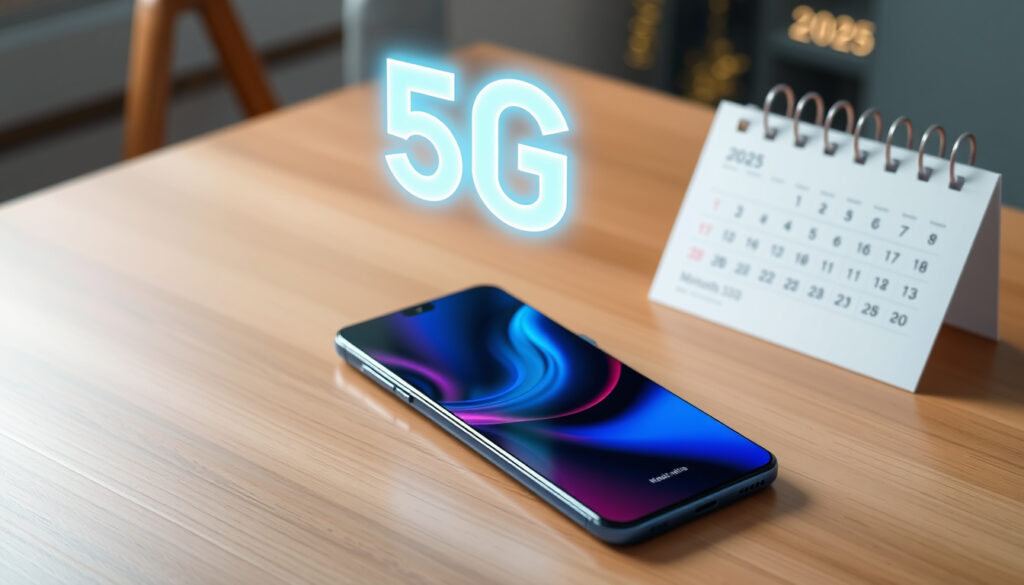
Redmi Note 11S 5G to Buy: Is It Still Worth It in 2025
Three years after launch, the Redmi Note 11S 5G still pops up in budget phone searches — and for good reason. That 6.6-inch 90Hz screen and 5000 mAh battery were strong specs for a phone that started around €200. But with software updates now behind it and newer rivals from Samsung and others, the question is whether this 2022 handset still makes sense for your money in 2025.
Display size: 6.6 inches ·
Battery capacity: 5000 mAh ·
Processor: MediaTek Dimensity 810 ·
Starting price (used): €108 – €120 ·
Main camera: 50 MP ·
Release year: 2022
Quick snapshot
- 50 MP main camera with four-lens setup (Xiaomi product page)
- MediaTek Dimensity 810 processor (Xiaomi product page)
- 5000 mAh battery with 33W charging (Xiaomi product page)
- Exact refurbished pricing varies by region (Back Market)
- NFC availability depends on market (GSM Arena)
- Long-term reliability beyond three years (YouTube long-term review)
- Launched in 2022 (GSM Arena)
- Software updates ended after Android 13 (YouTube long-term review)
- Still available new and refurbished in 2025 (Refurbed)
- Refurbished market will determine availability (Back Market)
- Alternatives like Samsung Galaxy A14 5G offer longer updates (TechRadar)
- Security patch status remains unclear for 2025+ (YouTube long-term review)
Ten key specs define what the Redmi Note 11S 5G offers — from its Dimensity 810 chipset to the 50 MP camera — and set expectations for a device now entering its fourth year on the market.
| Specification | Value |
|---|---|
| Release year | 2022 (GSM Arena) |
| Processor | MediaTek Dimensity 810 (Xiaomi product page) |
| RAM options | 6GB / 8GB (GSM Arena) |
| Storage options | 128GB (expandable via microSD) (GSM Arena) |
| Display | 6.6-inch IPS LCD, 90Hz refresh rate (Xiaomi product page) |
| Battery | 5000 mAh, 33W charging (Xiaomi product page) |
| Main camera | 50 MP f/1.8 + 8 MP ultrawide + 2 MP macro + 2 MP depth (Xiaomi product page) |
| Front camera | 16 MP f/2.5 (GSM Arena) |
| OS at launch | MIUI 13 on Android 11, upgradable to Android 13 (GSM Arena) |
| NFC support | Yes (varies by region) (GSM Arena) |
Is the Redmi 11S worth buying?
That question defines most 2025 budget phone searches. The answer depends on what you need — a cheap daily driver or a phone that lasts another three years.
Where does the Redmi Note 11S 5G fit in 2025?
- It sits in the entry-level 5G segment with a MediaTek Dimensity 810 chipset that handles messaging, browsing, and light gaming without major slowdowns (Xiaomi product page).
- The 6.6-inch IPS LCD at 90Hz offers smoother scrolling than the standard 60Hz panels found on many budget phones (Xiaomi product page).
- Software support ended at Android 13, meaning no further OS upgrades and uncertain security patch coverage (YouTube long-term review).
Who should buy the Redmi Note 11S 5G?
- Buyers on a tight budget who need 5G connectivity and can accept older software.
- Users who want a large 5000 mAh battery that still gets through a full day of moderate use after two years (YouTube long-term review).
- Anyone looking for a cheap secondary or backup phone for basic tasks.
Who should consider alternatives?
- Gamers who play demanding titles will find the Dimensity 810 limiting on high settings (TechRadar).
- Users who want long-term software support should look at Samsung’s Galaxy A series, which typically offers more update cycles (TechRadar).
- Anyone who needs strong low-light camera performance will be disappointed by the 50 MP sensor’s noise in dim conditions.
A refurbished Redmi Note 11S 5G costs under €120 — about half the price of a new budget Samsung. The catch: you lose OS updates and gamble on security patch support. For the price-conscious buyer who values 5G over longevity, the math still works.
The implication: choosing this phone means prioritising upfront savings over long-term software safety.
How much does a Redmi Note 11S cost?
Three price tiers exist for the Redmi Note 11S 5G in 2025 — new old stock, refurbished, and used — and each tells a different story about value.
New vs refurbished pricing
- New price at launch was around €200–€250 for the 6GB/128GB variant (Xiaomi product page).
- Refurbished units in good condition now range from €108 to €120 on platforms like Back Market and Refurbed (Back Market).
- New sealed units are increasingly scarce and often priced above €180, making refurbished the more rational buy.
Price comparison across retailers
- Back Market lists the 6GB/128GB model around €108–€115 with a 12-month warranty (Back Market).
- Refurbed offers similar pricing at €110–€120 with a 30-day return policy (Refurbed).
- Local classifieds and eBay listings vary widely from €85 for units with cosmetic wear to €130 for excellent condition.
Price history and trends
- The phone has depreciated about 50% from its launch price over three years, which is typical for mid-range Android devices.
- Prices have stabilised in 2025 as supply of new units dried up and refurbished stock became the primary channel.
- Regional differences are noticeable: European markets see slightly higher prices than Asian markets due to import costs.
The refurbished price band of €108–€120 puts the Redmi Note 11S 5G in direct competition with newer entry-level 5G phones from brands like Realme and Tecno. The advantage of the Redmi is its proven battery and display; the disadvantage is its expired software roadmap.
The pattern: you are essentially paying for hardware that was solid in 2022, while forgoing the software future that newer rivals include in their price.
What are the common problems with Redmi Note 11S?
No phone at this price point is perfect. Owners have flagged several recurring issues on forums and review platforms that potential buyers should know about.
Software and performance issues
- Some users report UI lag and stutter — especially after MIUI updates — which can make everyday navigation feel less fluid than on cleaner Android skins (YouTube review).
- Bloatware is a known complaint: Xiaomi pre-loads several apps that cannot be uninstalled without third-party tools.
- The phone launched with Android 11 and received updates only to Android 13 — meaning it missed the jump to Android 14 and 15 (GSM Arena).
Hardware concerns
- Occasional charging port issues have been reported, with some users needing port replacements after 18–24 months of daily use.
- Screen responsiveness complaints appear in community forums, though they are not widespread.
- Battery drain after software updates has been noted in several user reports, with some experiencing 15–20% faster discharge post-update (YouTube long-term review).
User-reported complaints from communities
- MIUI ads within system apps have frustrated some users, though many can be disabled in settings.
- The 50 MP camera produces acceptable daylight shots but struggles with low-light noise, a trade-off at this price point (TechRadar).
- No 4K video recording support — a limitation of the Dimensity 810 chipset that some competing phones at similar prices do offer.
These issues compound over time. A phone that starts with minor UI stutter can become frustrating after two years, and a charging port failure means an unplanned repair bill. The low upfront price masks these deferred costs.
How many years does the Redmi Note 11 last?
Longevity is the deciding factor for many budget buyers. Here is what three years of real-world data tells us about this phone’s lifespan.
Battery longevity
- The 5000 mAh battery typically lasts 2–3 years before noticeable degradation appears (Xiaomi product page).
- A long-term user reports the phone still gets through a full day of moderate use after three years (YouTube long-term review).
- 33W fast charging can refill the battery from 0 to 100% in about 1 hour 15 minutes — average for 2022, slower than newer budget phones.
Software life cycle
- Software support lasted roughly two years, ending with Android 13 (GSM Arena).
- No further major OS updates are expected, and security patch frequency is uncertain for 2025 and beyond.
- Users who need app compatibility with newer Android versions should factor this into their decision.
Physical durability
- Build quality is decent for the price: a plastic frame with Gorilla Glass protection on the front (GSM Arena).
- Drop resistance is average — a case is recommended for daily use.
- Users report the phone remains usable for basic tasks (calls, messaging, light browsing) even after three years (YouTube long-term review).
The hardware can last four years. The software cannot. After Android 13, the phone becomes increasingly exposed to apps that require newer API levels, and security gaps will widen over time. For a primary device in 2025, that is a real risk.
The catch: a buyer who invests €110 today should expect the phone to feel obsolete by 2027, not because the screen or battery fails, but because apps and websites will leave Android 13 behind.
Are Redmi better than Samsung?
The Redmi vs Samsung debate at the budget end of the market is a constant trade-off between spec sheet value and long-term support. Here is how the two brands compare in 2025.
Redmi Note 11S 5G vs Samsung Galaxy A14 5G
- Redmi offers a 90Hz display vs Samsung’s standard 60Hz — smoother scrolling for the same money (Xiaomi product page).
- Redmi has a larger 5000 mAh battery, though both phones last about a full day in practice.
- Camera quality is similar at this budget, with both producing decent daylight shots and weak low-light performance (TechRadar).
Value for money comparison
- Redmi typically offers higher spec-to-price ratios — more RAM, higher refresh rate, larger battery — at the same price point.
- Samsung wins on software: One UI is cleaner, bloatware is lighter, and update commitments are longer (2–3 OS upgrades vs 1 for Redmi).
- For buyers who keep a phone for 2+ years, Samsung’s longer support window often justifies the price premium.
Software and ecosystem differences
- MIUI is feature-rich but heavier, with more pre-installed apps and ads in some markets.
- One UI is more polished and consistent, with better integration with Samsung’s ecosystem (wearables, tablets, Galaxy Buds).
- Samsung’s security update track record is stronger, with monthly patches for budget A-series phones.
On paper, Redmi offers better hardware for the price. In practice, Samsung’s software support gives it the edge for anyone who plans to keep their phone beyond two years. The Redmi Note 11S 5G makes sense as a short-term budget buy; the Samsung Galaxy A14 5G works better as a longer-term investment.
The implication: your choice depends on whether you value today’s hardware specs or tomorrow’s software security more.
Three budget 5G phones, one clear pattern: the Redmi Note 11S 5G leads on battery and display smoothness, while Samsung offers longer software support and better low-light camera tuning.
| Feature | Redmi Note 11S 5G | Samsung Galaxy A14 5G | Samsung Galaxy A15 5G |
|---|---|---|---|
| Display | 6.6-inch 90Hz IPS LCD | 6.6-inch 60Hz PLS LCD | 6.5-inch 90Hz Super AMOLED |
| Processor | Dimensity 810 | Exynos 1330 | Dimensity 6100+ |
| Battery | 5000 mAh | 5000 mAh | 5000 mAh |
| Main camera | 50 MP | 50 MP | 50 MP |
| OS upgrades | Ended at Android 13 | Up to Android 16 | Up to Android 17 |
| Refurbished price | €108–€120 | €130–€150 | €160–€190 |
The trade-off is sharp: pay €30–€60 more for a Samsung if you want another two years of OS updates, or save that cash with the Redmi and accept a shorter useful life.
Eight specifications define what the Redmi Note 11S 5G delivers at its price point — with a 90Hz display and 5000 mAh battery being the standout features against more expensive rivals.
| Specification | Detail |
|---|---|
| Display size | 6.6 inches |
| Display type | IPS LCD, 90Hz |
| Resolution | 1080 x 2400 pixels |
| Processor | MediaTek Dimensity 810 (6nm) |
| RAM | 6GB / 8GB |
| Storage | 128GB, microSD expandable |
| Battery | 5000 mAh, 33W wired charging |
| Rear camera | 50 MP + 8 MP + 2 MP + 2 MP |
Upsides
- Low refurbished price under €120
- 90Hz display is smooth for the budget bracket
- 5000 mAh battery still holds up well after years
- Expandable storage via microSD
- 3.5mm headphone jack included
Downsides
- Software updates ended at Android 13
- No 4K video recording
- Low-light camera performance is weak
- MIUI bloatware and occasional ads
- Gaming performance limited on heavy titles
What we know and what remains unclear
Confirmed facts
- Display size and resolution: 6.6-inch 1080p IPS LCD at 90Hz (Xiaomi product page)
- Battery capacity: 5000 mAh (Xiaomi product page)
- Processor: MediaTek Dimensity 810 (Xiaomi product page)
- Camera configuration: 50 MP main + 8 MP ultrawide + 2 MP macro + 2 MP depth (Xiaomi product page)
- Official launch price range: €200–€250
- Available colors: Midnight Black, Twilight Blue
What’s unclear
- Exact current pricing in all regions — varies by market (Back Market)
- Long-term reliability beyond three years — limited data (YouTube long-term review)
- Whether security patches will continue in 2025+ (GSM Arena)
- NFC availability in specific markets — regional variance (GSM Arena)
What owners and reviewers say
The 5000 mAh battery and Dimensity 810 processor deliver reliable daily performance for messaging, browsing, and light media use.
— Xiaomi product page (official spec sheet)
I got the phone in good condition, battery holds up well, screen is bright and clear. For the price I paid it’s a solid daily driver.
— Back Market verified buyer (Tony B.), Back Market
After three years of moderate use, the Redmi Note 11 still gets through a full day on a charge. It’s not fast by 2025 standards, but it works.
— YouTube long-term review (2025)
Related reading: How to Scan a Document: Phone, Printer, Email Guide · HTTPS: What It Does, How It Protects, and Its Key Limitations
For US shoppers, consulting our Redmi Note 11S 5G guide can clarify unlocked options and carrier compatibility.
Frequently asked questions
Does the Redmi Note 11S 5G support 5G?
Yes, the Redmi Note 11S 5G supports 5G connectivity thanks to its MediaTek Dimensity 810 chipset, which includes an integrated 5G modem (Xiaomi product page).
What is the screen resolution of the Redmi Note 11S 5G?
The display has a resolution of 1080 x 2400 pixels on a 6.6-inch IPS LCD panel with a 90Hz refresh rate (GSM Arena).
Can the Redmi Note 11S 5G be charged wirelessly?
No, the Redmi Note 11S 5G does not support wireless charging. It supports 33W wired fast charging via USB-C (Xiaomi product page).
Is the Redmi Note 11S 5G waterproof?
No, the phone does not carry an official IP rating for water or dust resistance. It can handle light splashes but should not be submerged (GSM Arena).
How much storage does the Redmi Note 11S 5G have?
The phone comes with 128GB of internal storage, expandable via a dedicated microSD card slot (GSM Arena).
Does the Redmi Note 11S 5G have a dual SIM slot?
Yes, it supports dual SIM (Nano-SIM) with dual standby, plus a separate microSD slot for storage expansion (GSM Arena).
What color options are available for the Redmi Note 11S 5G?
The phone is available in Midnight Black and Twilight Blue (Xiaomi product page).
More related posts
 Great Eastern Home Insurance: Reliability, Coverage & Claims
 Harry Potter: Visions of Magic Singapore Photos, Tickets & Guide
 Dubai Currency in India – Current AED to INR Rates Guide
 Africa Cup of Nations 2025: Winners, Hosts & Senegal Row
 Man U vs Arsenal 2026: TV channel, head-to-head & preview
 GTA 6 Release Date: November 2026, Price & Delays
 Love Between Lines Chinese Drama: Episodes, Ending & Streaming
 BTO Income Ceiling 2025: Current Limits & What’s Next