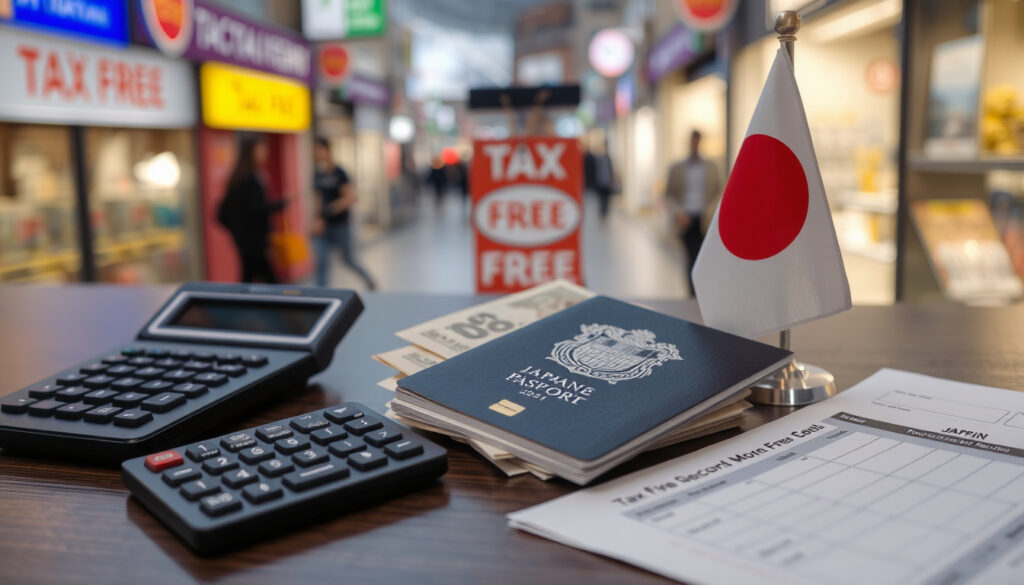
Japan Tax Refund 2025: New Rules & How to Claim
Japan’s tax-free shopping system is undergoing its biggest overhaul in decades, shifting from instant store savings to a post-departure refund model. This guide breaks down the 2025 rules, the April 2025 shipping ban, and the complete system flip to airport refunds starting November 1, 2026.
Japan consumption tax rate: 10% (standard), 8% (reduced for food) ·
Minimum purchase for tax-free: 5,000 JPY per day per store (general goods/consumables) ·
Current refund method: Deducted at store ·
New system launch date: November 1, 2026 ·
Intermediate change date: April 1, 2025
Quick snapshot
- Store exemption ends on October 31, 2026 (Japan National Tourism Organization (JNTO))
- Airport refund starts November 1, 2026 (Grant Thornton Japan (tax advisory))
- Minimum purchase: 5,000 JPY per day per store (KIX Duty Free (airport retail guide))
- Whether handling fees will be standardized across all refund operators
- Exact refund processing time at airport during peak travel
- If any transitional period for goods purchased before November 2026 and flown out after
- March 31, 2025: Government enacts major reform (JNTO)
- April 1, 2025: Ban on shipping tax-free items via international mail (Rakuten Travel (travel guide))
- November 1, 2026: New refund-at-airport system begins (Grant Thornton Japan)
- From April 2025: no more mailing tax-free items home (Rakuten Travel)
- From November 2026: pay full price, claim refund at airport customs (Japan National Tax Agency (official PDF))
- Customs confirmation required within 90 days of purchase (Japan National Tax Agency)
Six key facts at a glance, one pattern: the Japanese government is closing loopholes in the tax-free system, with stricter rules for shipping and a fundamental shift from store-side deduction to post-departure refunds.
| Fact | Value |
|---|---|
| Consumption tax rate | 10% (standard), 8% (food, non-alcoholic drinks) |
| Minimum purchase for tax-free | 5,000 JPY per day per store |
| Eligible travelers | Foreign tourists staying less than 6 months |
| Store types | Stores displaying ‘Tax-Free Shop’ sign |
| 2025 change date | April 1, 2025 |
| 2026 change date | November 1, 2026 |
How does tax refund work in Japan in 2025?
Current store-deduction system
- Consumption tax — 10% on most goods, 8% on food items — is deducted at the point of sale. Tourists pay the after-tax price directly at the register (KIX Duty Free (airport retail guide)).
- The minimum purchase to qualify is 5,000 JPY before tax per store per day for both general goods and consumables (KIX Duty Free).
- Only stores displaying a “Tax-Free Shop” sign can process the exemption. Most major department stores, electronics chains like Bic Camera, and drugstores participate (Japan National Tourism Organization (JNTO)).
Eligibility requirements for tax-free shopping
- Foreign tourists staying in Japan for less than 6 months qualify (KIX Duty Free).
- A physical passport with an entry stamp must be shown at the store — no photocopies or digital scans accepted (Klook (travel booking platform)).
- General goods (electronics, clothing, souvenirs) must be taken out of Japan within 6 months of purchase. Consumables (food, cosmetics, medicines) must leave within 30 days in unopened, sealed packaging (KIX Duty Free).
Step-by-step process at the store
- Shop and select items: Ensure total purchase at one store on one day reaches 5,000 JPY before tax.
- Present passport at checkout: The store scans your passport and records the purchase in Japan’s tax-free system.
- Pay the tax-excluded price: The display price is often tax-included (shown as “tax-in” or ” “). The clerk deducts the consumption tax and you pay the net amount.
- Receive a sealed bag: Consumable items are sealed in a special bag that must remain unopened until you leave Japan.
- Keep receipts: Hand them to customs at departure along with the goods for inspection, though in practice random checks are more common.
What changes to Japan tax-free shopping happen on April 1, 2025?
Ban on shipping tax-free items via international parcel
- From April 1, 2025, tax-free items purchased in Japan can no longer be sent home via international mail or courier. The previously common practice of having a store ship purchases directly to your home address is now prohibited for tax-free transactions (Rakuten Travel (travel guide)).
Impact on tourists who want to send purchases home
- You must personally carry all tax-free goods out of Japan when you depart. This rule, enforced by customs at airports, aims to prevent goods from being resold domestically (Grant Thornton Japan (tax advisory)).
- If you want to mail an item, you must pay regular price (including consumption tax) before shipping — the tax-free exemption only applies to goods you physically take with you.
Tourists flying from Narita, Haneda, or Kansai with multiple shopping bags now face stricter luggage limits. If you plan to buy a rice cooker, a set of knives, and cosmetics, you’ll need checked luggage space — or pay full tax and ship it.
How will Japan tax refund work in 2026?
New refund-at-airport system starting November 1, 2026
- On November 1, 2026, Japan flips its tax-free model entirely. Instead of getting a discount at the store, you will pay the full tax-included price upfront and claim a refund after your departure procedures at the airport (Japan National Tourism Organization (JNTO)).
- The Japan National Tax Agency has confirmed that tax-free shops will sell goods at a price including consumption tax under the new system (Japan National Tax Agency (official PDF)).
- Crucially, customs must confirm that you are carrying the goods out of Japan within 90 days of purchase before the refund can be processed (Japan National Tax Agency).
The implication for tourists: the refund process shifts from a passive discount to an active claim that requires planning.
Purchase with full price including tax, then claim refund at departure
- You will need to present both your passport (with an entry stamp) and the original purchase receipts at the customs counter before departure. Refunds are expected to be paid in cash or credited back to your card (Japan National Tax Agency).
- Major airports likely to have refund counters include Narita, Haneda, Kansai, Chubu, Fukuoka, New Chitose, and Naha (Trip.com (travel guide)).
The Japanese government introduced the refund model to crack down on domestic diversion — tax-free goods being resold inside Japan rather than exported. Grant Thornton Japan notes the reform was a direct response to system abuse (Grant Thornton Japan).
How much is the Japan tax refund for tourists?
Refund amount calculation
- The refund equals the consumption tax you paid: 10% of the purchase price for general goods, and 8% for food and non-alcoholic beverages (VATCalc (tax analysis site)).
- Example: a 50,000 JPY electronics purchase earns a refund of 5,000 JPY. A 10,000 JPY grocery bill returns about 800 JPY.
- Some stores charge a handling fee — typically 1% to 2% of the tax amount — which eats into the savings. For a 5,000 JPY refund, a 2% handling fee leaves you with 4,900 JPY.
Consumption tax rates: 10% standard, 8% reduced
- Most items fall under the standard 10% rate, including electronics, clothing, cosmetics, and souvenirs.
- The reduced 8% rate applies to food and non-alcoholic drinks bought from grocery stores and convenience stores, but many tax-free stores apply this rate at checkout for qualifying items (KIX Duty Free).
- Important: Services — like hotel stays, restaurant meals, train tickets, and entry fees — are subject to consumption tax but are not eligible for the tax-free shopping system. Only physical goods qualify.
How to claim tax refund in Japan for tourists
Documents needed: passport, receipt
- Under the current system (until October 2026): physical passport with entry stamp, plus original store receipts (Klook (travel booking platform)).
- Under the post-2026 system: same passport, plus receipts, plus the goods themselves in hand at the airport customs counter (Japan National Tax Agency).
Process at the airport (post-2026)
- Check your luggage: Keep tax-free goods in your carry-on or have them accessible for customs inspection before checking bags.
- Visit customs counter: Present passport, receipts, and goods for confirmation. Customs will verify the items match the receipts and that packaging is intact (for consumables).
- Receive confirmation: Customs stamps or records the export confirmation — a necessary step before the refund is released (Japan National Tax Agency).
- Claim refund: Take the customs confirmation to the designated refund counter (likely near the departure area) to receive cash or a credit card credit.
- Proceed through security: After the refund is processed, continue to the boarding gate.
Timeline: key dates for Japan tax-free reform
- March 31, 2025: Japanese government enacts major reform to the Tax-Free Shopping system (Japan National Tourism Organization (JNTO)).
- April 1, 2025: Ban on sending tax-free items home via international mail takes effect (Rakuten Travel (travel guide)).
- November 1, 2026: New refund-at-airport system begins; store deduction ends (Grant Thornton Japan (tax advisory)).
The timeline shows two sharp inflection points. The April 2025 change is immediate — it closes the shipping loophole. The November 2026 overhaul requires a logistical setup at Japan’s major airports. For tourists booking flights in late 2026, the question is not just what you buy, but how much time you leave between customs and your gate.
References
- Japan National Tourism Organization — Changes Are Coming to Tax-Free Shopping in Japan
- Japan National Tax Agency — official PDF on new refund system (NTA Publication 2025-06)
- Grant Thornton Japan — Tax Bulletin December 2025
- KIX Duty Free — Japan Tax Refund Rate Info
- Rakuten Travel — Guide to Tax-Free Shopping in Japan
- Klook — Japan Tax Refund Shopping Guide
- VATCalc — Japan to Reform Consumption Tax Reforms 2025
- Trip.com — Tax Refund Japan Guide
citybit.in, livejapan.com, japanhandbook.com, mlit.go.jp, en.japantravel.com
Frequently asked questions
What is the consumption tax rate in Japan?
The standard consumption tax rate in Japan is 10% for most goods. A reduced rate of 8% applies to food and non-alcoholic drinks (VATCalc).
Do all stores in Japan offer tax-free shopping?
No, only stores displaying a “Tax-Free Shop” sign are authorized to process tax-free purchases. Major department stores, electronics retailers, and drugstores commonly participate, but smaller shops may not (JNTO).
How much do I need to spend to get a tax refund?
The minimum eligible purchase amount is 5,000 JPY before tax per store per day for both general goods and consumables (KIX Duty Free).
Can I get a tax refund on food and drinks?
Yes, food and non-alcoholic drinks qualify at the reduced 8% rate, provided the total purchase at a single store on the same day reaches 5,000 JPY before tax. Consumable items must remain in unopened, sealed packaging and be taken out of Japan within 30 days (KIX Duty Free).
What happens if I lose my receipt before the refund?
Under the current store-deduction system, the receipt is needed for customs verification at departure. Under the 2026 airport-refund system, you must present the original receipt at the refund counter — lost receipts mean lost refunds. Keep all shopping receipts in a safe place, ideally in your passport wallet.
Is there a limit on how much I can claim in tax refunds?
For consumables, the maximum tax-free purchase per store per day is 500,000 JPY before tax. General goods have no upper limit, but overseas customs at your home country may impose duties on high-value items. There is no cap on the total amount of tax refund per tourist overall (KIX Duty Free).
Can I use a tax refund app in Japan?
No dedicated government app currently exists for Japan tax-free shopping. Some third-party apps (like Global Blue’s) are used in other countries but are not integrated with Japan’s system. You must rely on passport scanning at the store and, post-2026, in-person customs confirmation at the airport.
Do I need to have my passport with me at the airport refund counter?
Yes, under both the current and future systems, your physical passport with a valid entry stamp is required to claim the tax refund. Digital copies or photos are not accepted (Japan National Tax Agency).
Related reading
- SGD to Yen Forecast 2026 — Currency trends that affect how much your tax refund is worth in home currency.
- Singapore Telcos Borderless Mobile Plans 2026 — Stay connected while shopping in Japan, including tips on roaming and eSIMs.
For tourists heading to Japan in 2025, the system still works the old way: show your passport, save 10%. But the April rule means you can’t ship anything home tax-free. For anyone traveling after November 2026, the big shift is from saving at the register to chasing a refund at the airport. The implication for travelers from Singapore is clear: plan your shopping timing, keep receipts safe, and budget extra airport time — or leave the tax savings on the counter.
More related posts
 COVID-19 Vaccine Ireland: Types, Boosters & HSE Guide 2025
 Coffee Bean and Tea Leaf: Owner, Origin, Menu & Deals
 IRAS Income Tax Calculator 2026: How to Use & Calculate Tax in Singapore
 100 Singapore Dollars to Malaysian Ringgit – SGD to MYR Today
 Sim Lim Square Price List – 2024 Laptops Phones PCs Prices
 UOB Gold Price Singapore Chart: Latest Buy/Sell & Trends
 ES Tunis vs Chelsea 2025 Final Score, Goals, Highlights & Lineups
 Reserve Bank of India: History, Functions, Governors, Act