Harry Potter and the Philosopher’s Stone vs Sorcerer’s Stone
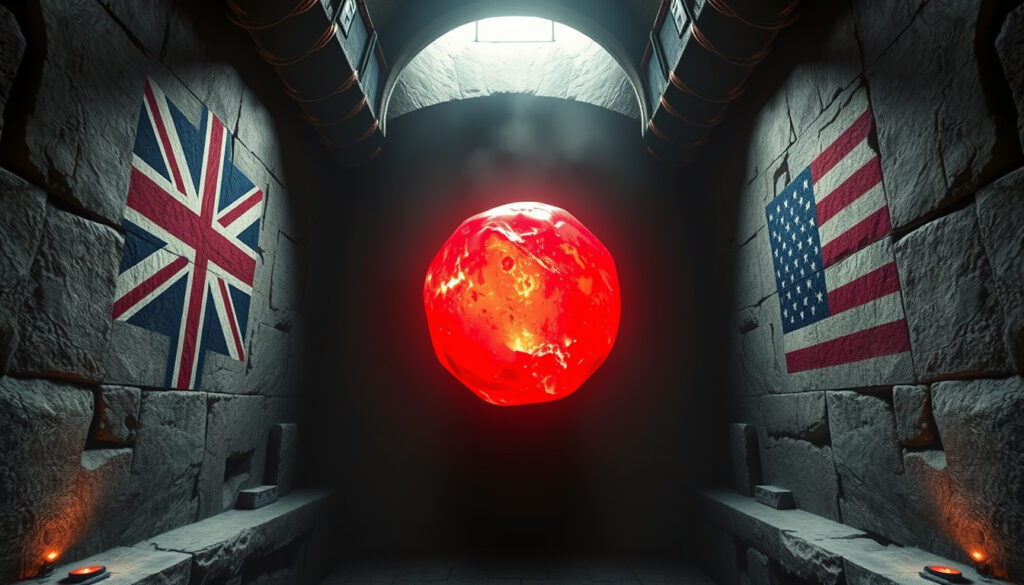
The first Harry Potter book has two titles depending on where you bought it: “Harry Potter and the Philosopher’s Stone” in the UK and Canada, but “Harry Potter and the Sorcerer’s Stone” for American readers. This single-word swap, made before the 1998 US release, reframed the magical premise for millions of young readers and sparked ongoing debate among fans on both sides of the Atlantic.
Author: J.K. Rowling · Book Release Year: 1997 · Film Release Year: 2001 · Proof Copy Sale: $13,000 · Main Character Origin: Orphaned boy discovers wizard heritage
Quick snapshot
- Exact internal reasons beyond publisher advice for Rowling’s pseudonym
- UK publication June 1997 → US edition September 1998 → Film November 2001
- Series continues through seven books; reading order debates persist
The table below summarizes the key publication and title differences between the two major English-language editions of the first Harry Potter book.
| Field | Value |
|---|---|
| Original Title | Harry Potter and the Philosopher’s Stone |
| US Title | Harry Potter and the Sorcerer’s Stone |
| Author | J.K. Rowling |
| Publication Year | 1997 |
| Film Year | 2001 |
Why did they change philosopher’s stone to sorcerer’s stone?
The first Harry Potter book carries two different titles depending on where you bought it: “Harry Potter and the Philosopher’s Stone” for the UK and Canada, but “Harry Potter and the Sorcerer’s Stone” for American shelves (MuggleNet). This wasn’t a last-minute typo—American editors and Rowling’s publisher made the call before the 1998 US release, citing audience accessibility as the core reason.
US Market Adaptation Reasons
The rationale behind the change ran along linguistic and commercial lines. In the US, “philosopher” typically denotes a scholar of philosophy rather than the alchemist archetype central to Nicolas Flamel’s legend in the story, so editors worried the title would mislead young readers about the book’s actual content (Goodreads Q&A). There was also a sense that “Sorcerer” carried stronger magical connotations that would grab attention faster in a crowded children’s market (Goodreads Q&A).
American editors effectively rewrote the book’s first impression—a single word change that reframed the entire magical premise for a new audience.
Impact on Global Titles
The UK kept the original “Philosopher’s Stone,” which meant international readers and travelers often encountered different editions with divergent wordplay. British fans noted that terms like “Sellotape” became “Scotch tape” in American versions, and references like “One Hundred” shifted to “One Thousand” on certain pages (HP Lexicon). These small changes accumulated, occasionally disrupting Rowling’s carefully crafted British vernacular—like “Spellotape” no longer playing off its real-world counterpart (MuggleNet).
The implication: readers in different markets didn’t just receive different words—they experienced subtly different versions of the wizarding world’s texture.
What are the Harry Potter books 1, 2, 3, 4, 5, 6, 7?
The Harry Potter series spans seven core novels, published by Bloomsbury in the UK from 1997 through 2007. The reading order follows the chronological timeline of Harry’s years at Hogwarts, though some collectors debate whether the US Scholastic editions should be shelved separately due to their title variations.
Full Series List
- Harry Potter and the Philosopher’s Stone (1997)
- Harry Potter and the Chamber of Secrets (1998)
- Harry Potter and the Prisoner of Azkaban (1999)
- Harry Potter and the Goblet of Fire (2000)
- Harry Potter and the Order of the Phoenix (2003)
- Harry Potter and the Half-Blood Prince (2005)
- Harry Potter and the Deathly Hallows (2007)
Recommended Reading Order
Bloomsbury’s official sequence remains the standard, and most fans recommend starting with Book 1 regardless of which title variant you own. The early books lay foundational mysteries that pay off in later volumes, so reading out of order risks spoiling foreshadowing planted years in advance.
The pattern: each book escalates both the stakes and the complexity of Rowling’s world-building, making the journey from Stone to Deathly Hallows feel like one sustained narrative rather than seven standalone stories.
Which Harry Potter book sold for $13,000?
A proof copy of the first Harry Potter book—the pre-publication edition printed before final edits—commanded a record auction price of $13,000, underscoring how much collector value Rowling’s debut has accumulated since 1997.
Proof Copy Details
Proof copies differ from finished books: they’re produced for editorial review, often with different formatting, fewer illustrations, and occasional placeholder text. These early editions occasionally surface at specialty auctions where completists and investors compete for near-pristine examples.
The $13,000 sale signals that Harry Potter memorabilia has entered serious collector territory—driven by nostalgia, scarcity, and the franchise’s enduring cultural weight.
Auction Record Context
Comparable first editions in fine condition typically sell in the $5,000–$8,000 range, but proof copies with unique markings or early misprints push beyond that ceiling. Auction houses increasingly categorize Harry Potter items alongside rare books from established literary canons.
What this means: as the franchise ages, early-print Harry Potter material will likely continue appreciating—not just for fans, but for investors tracking cultural memory as asset value.
What was J.K. Rowling’s struggle?
Before Harry Potter became a global phenomenon, J.K. Rowling was an unemployed single mother living in Edinburgh in the mid-1990s, surviving on government assistance while writing whenever her daughter napped. The contrast between her current billionaire status and those early years forms one of publishing’s most cited comeback stories.
Early Hardships
Rowling has spoken frankly about the depression, loneliness, and financial strain she experienced during the Philosopher’s Stone writing period. She faced multiple rejections from publishers before Bloomsbury’s chairman Christopher Little took a chance on the manuscript in 1995.
Pre-Philosopher’s Stone Life
Her background before the breakthrough included working as a researcher and translator for Amnesty International and later as a teacher in Portugal. Those experiences—witnessing injustice, living abroad—seeded themes that would define the wizarding world’s moral landscape. She chose the pen name “J.K.” partly because her original name Joanne felt less marketable for children’s fantasy (a detail sometimes cited in fan discussions, though exact motivations beyond publisher advice remain somewhat unclear).
The catch: Rowling’s transformation from struggling single mother to publishing titan obscures how many qualified writers never get the second-chance encounter that changed her trajectory.
What is the sad story of J.K. Rowling?
The “sad story” framing reflects how Rowling’s public narrative blends genuine hardship with her later controversies. Her pre-fame poverty and depression are well-documented; her subsequent public disputes—particularly around gender rights and former cast members—have divided the fanbase she built.
Personal Challenges
Rowling’s own accounts describe a dark period in the early 1990s when she believed she had failed professionally and personally. She wrote in coffee shops to save heating costs, mapped out the wizarding world on scraps of paper, and faced condescension from publishers who passed on the manuscript before Bloomsbury’s fateful call. The author of Robinson Crusoe, Daniel Defoe, faced his own share of challenges, as detailed in this article: Daniel Defoe Robinson Crusoe.
Rise from Adversity
The arc from that Edinburgh flat to global franchise ownership is the kind of underdog narrative that publishers love—but Rowling’s later years have complicated the inspirational calculus. Daniel Radcliffe, who played Harry, publicly opposed her positions on transgender rights, while other cast members maintained diplomatic silence or expressed nuanced disagreement (ScreenRant coverage of the broader debate).
The trade-off: readers must separate the author from the work—a tension that intensifies with each new controversy but doesn’t diminish the seven-book world she created.
Book vs. Movie: Key Differences
The 2001 film adaptation brought Hogwarts to life but cut or altered numerous book details. Fans and critics have catalogued dozens of changes ranging from minor dialogue swaps to structural plot shifts that affect character development and narrative logic.
Scenes Cut from the Movie
- Snape’s potions riddle protecting the Stone—a showcase for Hermione’s logic (Books Real When Shared)
- Peeves the Poltergeist, who haunts the film’s absent sequences (Imagination Adaptation)
- Harry seeing his entire extended family in the Mirror of Erised rather than just his parents (Books Real When Shared)
- Unconscious troll and potions puzzle after the chess match (Poggers)
- Hagrid giving Harry a photo album of his parents after the Gringotts encounter (Books Real When Shared)
Scenes Added or Changed for Film
- Ron delivers the line “She needs to sort out her priorities” after Hermione’s “expelled” quote (ScreenRant)
- Hagrid bends a gun barrel and it discharges, versus tying it into a knot without discharge in the book (Harry Potter Wiki)
- Vernon burning letters and sealing the mail slot versus sleeping in front of the door (Poggers)
- Quirrell dying when Harry’s touch turns him to dust, versus Voldemort separating and causing Quirrell’s death (Books Real When Shared)
The film had to cut roughly two hours of material to fit theatrical pacing—a necessary compromise that sacrificed the layered logic of the books’ challenges for visual momentum.
The implication: the movie works as a standalone introduction but loses the riddle-work and character depth that make the book a richer re-read experience.
“Rowling and her American editors decided to change the name to Sorcerer because it had a deeper magical presence and would not misinform US audiences of Flamel’s occupation.”
— Hannah Alessandra, Goodreads user
“They thought ‘Sorcerer’ would better catch the attention of young, American readers.”
— Jaden McNally, Goodreads user
Related reading: Apothecary Diaries Light Novel · The Last of Us 2 Remastered HBO
The original Harry Potter and the Philosopher’s Stone plot guide offers an in-depth look at the story’s beginnings, much like the UK edition central to these title debates.
Frequently asked questions
What is Harry Potter and the Philosopher’s Stone about?
An orphaned boy named Harry Potter discovers he’s a wizard on his eleventh birthday and enrolls at Hogwarts School of Witchcraft and Wizardry, where he uncovers a plot to steal a legendary Philosopher’s Stone guarded within the school.
Who plays Harry Potter in the Philosopher’s Stone movie?
Daniel Radcliffe stars as Harry Potter in the 2001 film directed by Chris Columbus, alongside Rupert Grint as Ron Weasley and Emma Watson as Hermione Granger.
When was Harry Potter and the Philosopher’s Stone published?
Bloomsbury published the UK edition on June 26, 1997, with the US Scholastic edition following on September 1, 1998.
What is the plot of Harry Potter and the Philosopher’s Stone?
Harry’s first year at Hogwarts involves making friends, learning magic, and thwarting Professor Quirrell’s attempt to steal the Philosopher’s Stone—which would grant its owner eternal life—while uncovering secrets about his parents’ past.
Is there a Harry Potter and the Philosopher’s Stone movie?
Yes, Warner Bros. released the adaptation on November 16, 2001, in both US and UK markets, grossing over $1 billion worldwide and launching an eight-film franchise.
What is the Harry Potter and the Philosopher’s Stone series order?
The full series runs: Philosopher’s Stone (1997), Chamber of Secrets (1998), Prisoner of Azkaban (1999), Goblet of Fire (2000), Order of the Phoenix (2003), Half-Blood Prince (2005), and Deathly Hallows (2007).
Where can I read Harry Potter and the Philosopher’s Stone in English?
Physical and digital copies are widely available through major booksellers, libraries, and platforms like Amazon and Kindle; the UK edition preserves the original “Philosopher’s” title for English purists.
For readers deciding between editions, the choice is straightforward: if you want the author’s original British voice with its wordplay intact, seek out a UK Bloomsbury edition. If you’re in North America and don’t mind the “Sorcerer’s” title, the Scholastic version reads identically in all the scenes that matter.
More related posts
 Fu Yuan Teochew Dining: Menu, Reviews & Clarke Quay Guide
 Cheap Flights to KL from Dublin: Best Deals & Tips
 1 Đô Singapore Bằng Bao Nhiêu Tiền Việt Hôm Nay? Tỷ Giá SGD VND
 Sam ung Galaxy A35 5G: I It Worth Buying in 2025?
 Rainbow Centre Margaret Drive: Address, Services, Hours & MRT
 Taiwan Semiconductor (TSM) Share Price: Buy, Sell, or Hold
 How to Right Click on MacBook: Trackpad, Keyboard, No Mouse
 SCB Bonus Saver Interest Rate 2026: Up to 5.85% p.a.